

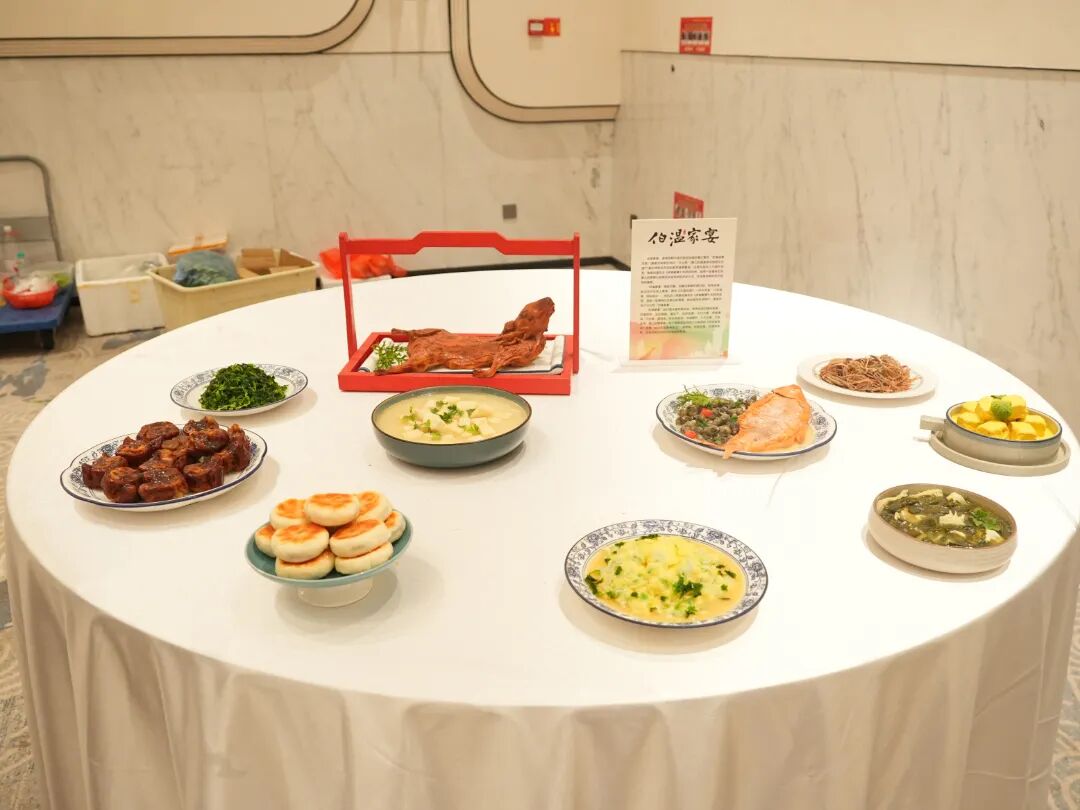
A feast named for a statesman. Though Liu Ji rose to the exalted second rank at the imperial court, he once wrote wistfully in a poem: "Even a royal feast of eight rare delicacies cannot compare to the simple tastes of home." His kinsmen never forgot his deep affection for his native soil. Following the spring and autumn ancestral rites, the Liu clan would assemble for a commemorative banquet. Over time, later generations drew inspiration from Liu Ji's own practical manual, Duoneng Bishi (A Compendium of Practical Arts), alongside the rich folklore surrounding Liu Bowen's Legends. Selecting dishes loaded with historical significance and combining them with Nantian’s pristine highland produce, they codified what is known today as the "Bowen Family Banquet." In 2014, the Wencheng County Government immortalized this culinary tradition in a micro-film. The feast centers around red rice, accompanied by local Bowen Job's-tears wine and red yeast rice wine — featuring a harmonious interplay of cold and hot courses, meats and wild greens, crafted to be appetizing, wholesome, and frugally refined.
Every dish tells a chapter of his story. The banquet opens quietly with a quartet of humble cold appetizers: drunken pickled ginger, dried stream loach, chilled wild forest fern, and the rustic "Five Grains Abundance" platter — featuring steamed sweet potatoes, corn, peanuts, soybeans, and taro. Then come the iconic named courses.
"Triple Success in Imperial Examinations" (San Yuan Ji Di): Triangular dumplings (Shanfen Jiao) crafted from sweet-potato starch and silky mashed taro. As legend tells, before Liu Bowen set off for the capital to sit the imperial examinations, his mother prepared a bowl of these triangular dumplings to speed him on his journey — wishing him first place across all three examination rounds. He went on to achieve that very feat. Clean Sleeves of Pure Integrity" (Liang Xiu Qing Feng): A delicate, slightly bitter dish of wild greens made from the tender shoots of the local Daqing tree. After helping Emperor Zhu Yuanzhang unify the realm, Liu Ji reformed civil administration, helped draft the Great Ming Legal Code, and urged the sovereign toward strict frugality. His hometown honors his incorruptible legacy with this modest green dish. Bowen's Sesame Cake" (Bowen Shaobing): Inspired by the famous historical prophecy song (Shaobing Ge). Emperor Zhu Yuanzhang, while dining on a sesame cake, covered the half-eaten pastry with a bowl and challenged Liu Ji to divine what lay beneath. "Half like the sun, half like the moon — bitten once by the golden dragon. It is a cake," Liu answered instantly. In memory of this famous exchange of wit between sovereign and minister, Liu's descendants place sesame cakes at the center of the table. Origin of the Mushroom God" (Gu Shen You Lai): Recalls how Liu Ji presented local shiitake mushrooms to Emperor Taizu during a prolonged drought when the monarch was fasting and praying for rain. Delighted by their rich flavor, the emperor decreed them an annual imperial tribute. Taking advantage of the royal favor, Liu Ji petitioned the court to grant the exclusive legal right of mushroom cultivation to three highland counties — Longquan, Qingyuan, and Jingning. This agricultural monopoly endured for over six centuries, and to this day, mushroom farmers across those regions venerate Liu Ji as one of their patron deities.
Hot courses crafted with rustic wisdom. The subsequent hot courses follow this same philosophy of unpretentious elegance: slippery, translucent Wencheng sweet-potato glass noodles; sun-dried bottle gourd that locks in the sweet essence of summer; velvety Nantian taro; field snails and stream shrimp harvested from Nantian’s crystal-clear creeks; tender June bamboo shoots gathered just before the height of summer heat; and Liu Family Tofu alongside "State Mentor Fish" — both cooked in the simplest, most rustic manner to honor Liu Ji's purity and wisdom. The feast closes gently with "Bailuodi" Herb-Steamed Warm Eggs, where fresh eggs are double-boiled with a cherished local wild herb — providing a soothing, warming conclusion to the highland banquet.
In 2019, the Bowen Family Banquet represented Wenzhou’s "A Hundred Counties, A Thousand Dishes" Initiative at the inaugural China Zhejiang Cuisine World Conference, taking home the Exhibition Gold Prize. To sit down at this banquet is to taste far more than exceptional food: it is an edible chronicle of the Ming dynasty's founding history, a great statesman's lifelong devotion to his native soil, and a clan’s four-century-long vigil over its most illustrious ancestor.