

Story
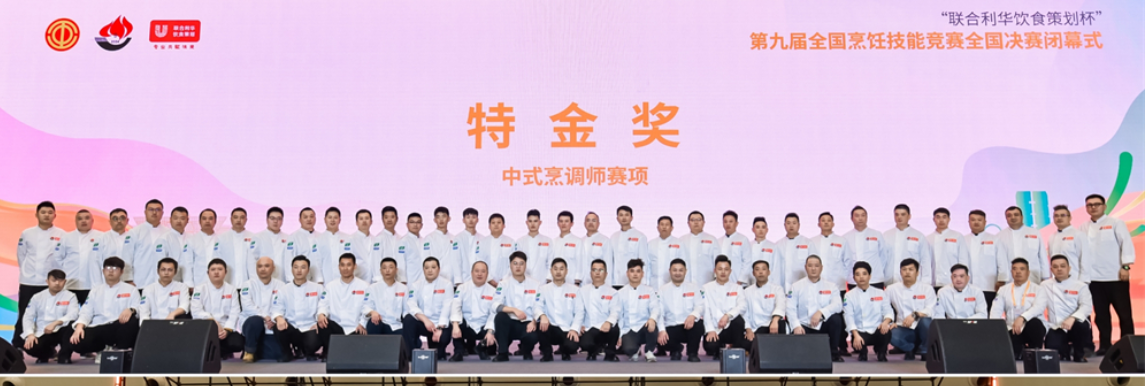
In December 2024, the ninth National Cooking Skills Competition held its national final in Zhengzhou. Founded in 1983 and held once every five years, it is one of the top-level competitions in China's catering industry. Nearly 300 elite chefs — the gold-medal winners among the top 15 Chinese-cooking competitors and top five Chinese-pastry competitors from each of 19 regional finals — competed over two days.
Wang Yihua, a chef from Taishun Changhong Hotel, won the Special Gold Award in the Chinese Cooking category. The judges praised his technique and innovative approach to dish design. For Wang, the competition was more than a personal achievement. "It put the taste of Ou cuisine on the national stage," the Wenzhou Restaurant, Hotel and Culinary Industry Association said, "and let more people understand and love Wenzhou's food culture."
Wang was not the first Wenzhou chef to win at the national level. In 2023, Jiang Zhaoguang, a teacher at Wenzhou Technician College, won the Special Gold Award at the National Master Chef Cooking Skills Competition in Suzhou, organised by the China Cuisine Association. In 1999, Zhang Renyu, then a young Ou cuisine chef, won gold in the cold-dish category and bronze in the hot-dish category at the Fourth National Cooking Technology Competition. He later became one of China's Top Ten Chefs. Each of these chefs took Ou cuisine to a national competition, where it faced China's eight major regional cuisines. Each time, it proved that a lighter, more restrained style could hold its own on the national stage.
At the national level, winning is about more than a single dish. It means cooking under pressure: working with mystery-box ingredients, racing against the clock and presenting dishes to judges who are themselves master chefs of Chinese cuisine. Wang Yihua's award showed that the defining qualities of Ou cuisine — light seasoning, precise knife work and a focus on the ingredient's natural flavour — could stand their ground against the richer, more elaborate styles represented in national competitions.
Three chefs, three competitions, twenty-five years apart. The first was Zhang Renyu, who went to Hangzhou to study before the 1999 competition and later said that Ou cuisine should be "light but not bland, refined and elegant". The second, Jiang Zhaoguang, is a teacher, passing his skills on to students at Wenzhou Technician College. The third, Wang Yihua, works at a hotel in Taishun, a mountain town. What connects them is not simply the medals they won. Each brought Ou cuisine to a national stage where it was the lesser-known outsider — lighter, more restrained and less elaborate than many of the country's better-known regional styles. And each time, it showed that being different could be a strength.