

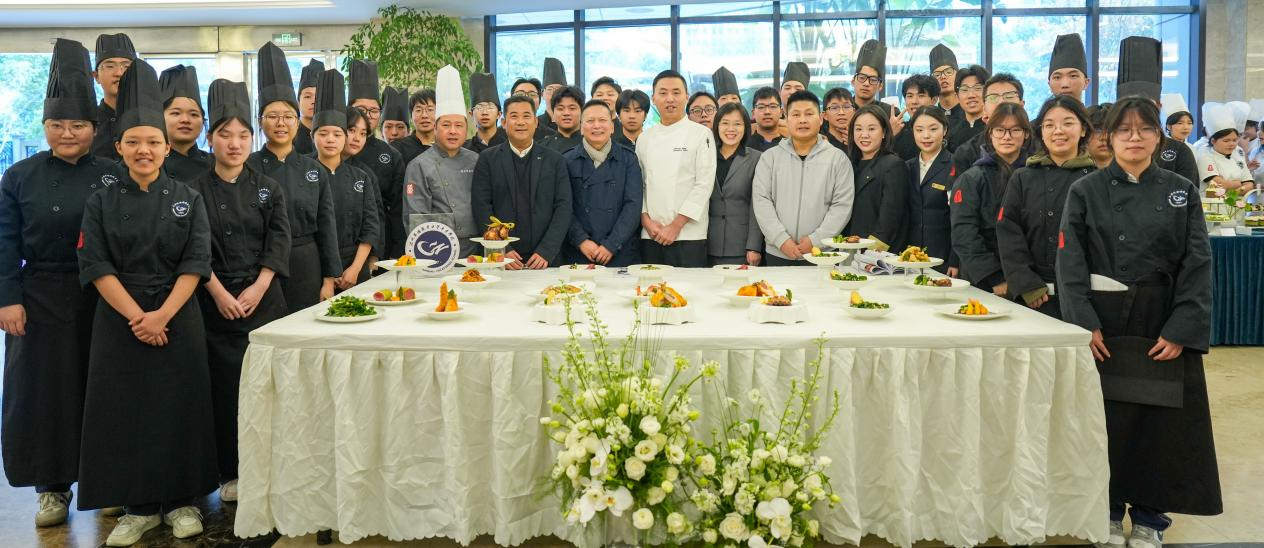
At Wenzhou Huaqiao Vocational School, the bridge is a project called the "Silk Road Cultural Feast." Since 2020, the school has operated what it terms a "flagship commercial simulation project" — an immersive exercise in which 110 third-year students design and execute a full banquet from scratch, covering everything from theme conceptualization and ingredient sourcing to food costing and nutritional analysis. Students collaborate in cross-disciplinary teams spanning Chinese cuisine, Western cuisine, and pastry arts. At the final showcase in December 2025, the judging panel contained no teachers. Instead, it comprised Pan Xiaolin, a China Culinary Master; the HR director and executive chef of the Shangri-La Wenzhou; the HR director of the Westin Wenzhou; and the R&D director of a local food corporation. Students presented their tables, defended their creative concepts, and fielded sharp questions from the panel. In 2024, the initiative was recognized as a national exemplary case study in culinary education.
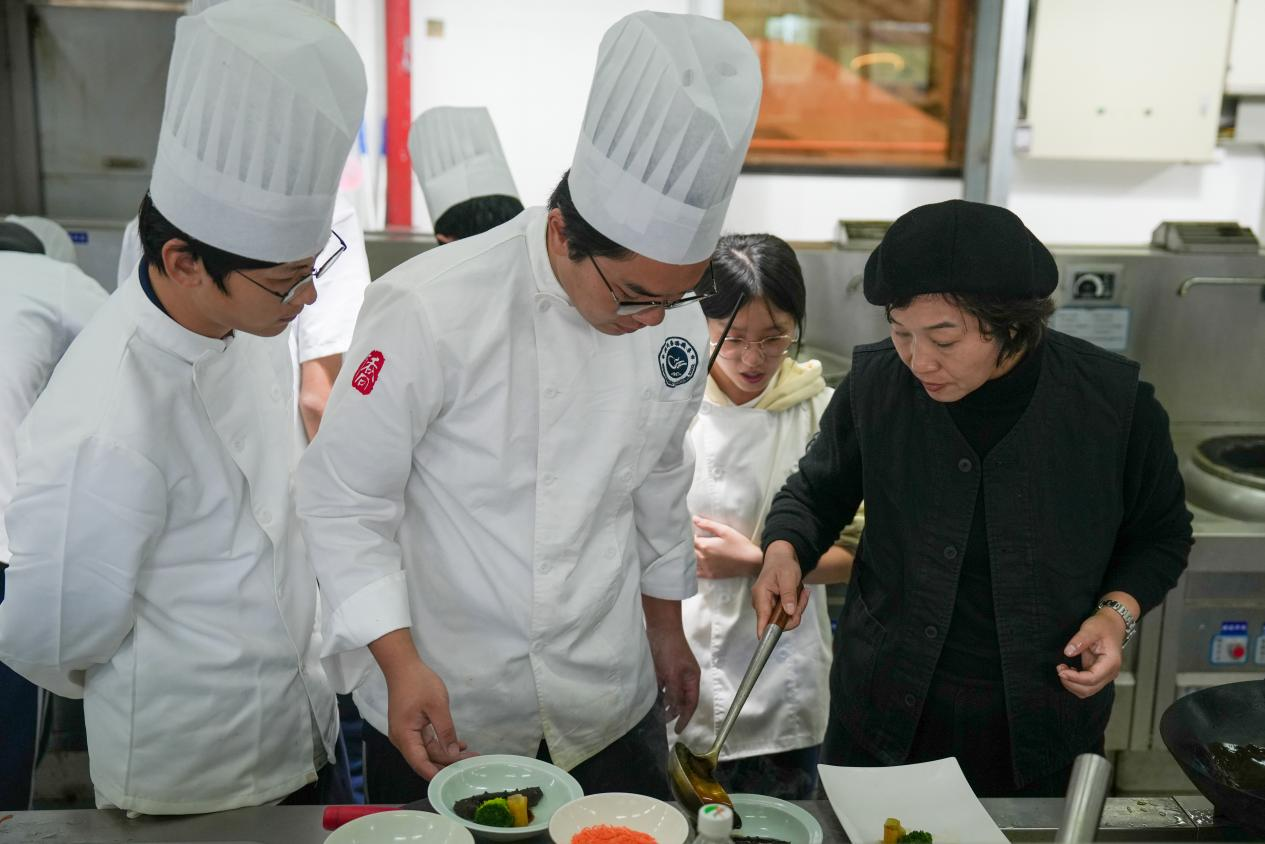
The school did not build this ecosystem alone. It leads the Wenzhou Hospitality and Culinary Industry-Education Integration Alliance — a collaborative network encompassing 13 vocational schools, 18 star-rated hotels, and 12 industry masters. On campus, a 120-million-yuan training facility equips students across 587 workstations. Off campus, students rotate through the working commercial kitchens of 50 partner hotels. An on-site Ou Cuisine Research Institute, headed by senior instructor Yang Miao, develops innovative recipes and hosts international tasting events — including an April 2025 session where visiting foreign chefs sampled a modernized take on Wenzhou's signature mud crab dish.
At Wenzhou Vocational College of Science and Technology, the model is embedded directly into the campus: the enterprise sits inside the school. In March 2022, the college partnered with the regional bakery chain Adonuso to establish a dedicated Pastry Industry Academy on the fourth floor of Building 2. The facility features a customized curriculum, industry-donated equipment, and a traditional mentorship ceremony where students bow to their corporate mentors. Operating in Wenzhou since 1997, Adonuso now runs dozens of outlets across Zhejiang and Shanghai. Its general manager, Wu Jun, attended the inauguration alongside the college’s academic director. The program designs an independent training track for students majoring in Food Intelligent Processing Technology, integrating corporate-co-developed courses and live market operations alongside standard academics. Since the major’s inception in 2012, over 50 graduates have interned or secured employment with Adonuso. This co-op framework has since expanded: the college's annual employer-partner fair now draws 67 corporate participants, including the Westin Hotel and the Yiming Dairy Group.
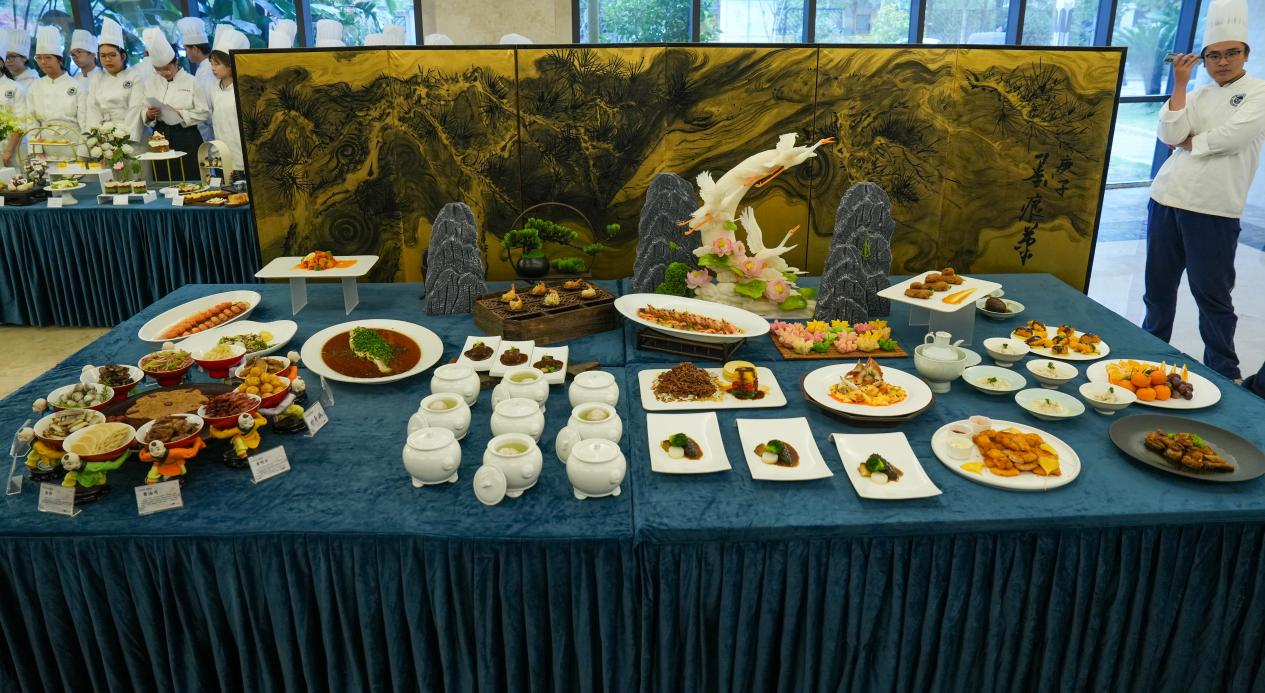
At Wenzhou Technician College, industry collaboration reaches its sharpest focus during recruitment. In June 2026, the college hosted a skilled talent fair where 172 enterprises offered 2,800 positions. The culinary department's centerpiece was a "Graduation Banquet" — students prepared a complete banquet, and prospective employers tasted it on the spot. Technical experts and industry veterans formed an evaluation panel, scoring each student on creativity, craftsmanship, technical execution, and job suitability. The college summarizes this approach as "assessing capability through creations, securing employment through proven skills." Numerous employment contracts were signed on site. Within the elite Ou Cuisine Master Class launched in 2025, over 30 culinary masters reside on campus, leading an immersive regimen of eight daily hours of practical training paired with rotations in star-rated hotel kitchens. The college reports that students are routinely recruited by five-star hotels well before graduation, with overall employment exceeding 98 percent for three consecutive years and over 90 percent of graduates choosing to build their careers in Wenzhou.
What connects these three models is neither a standardized curriculum nor a government mandate. It is a shared working philosophy: a culinary student cannot learn to cook for real customers unless the person paying for the meal is in the room — as a mentor, as a sponsor, or as a judge.