

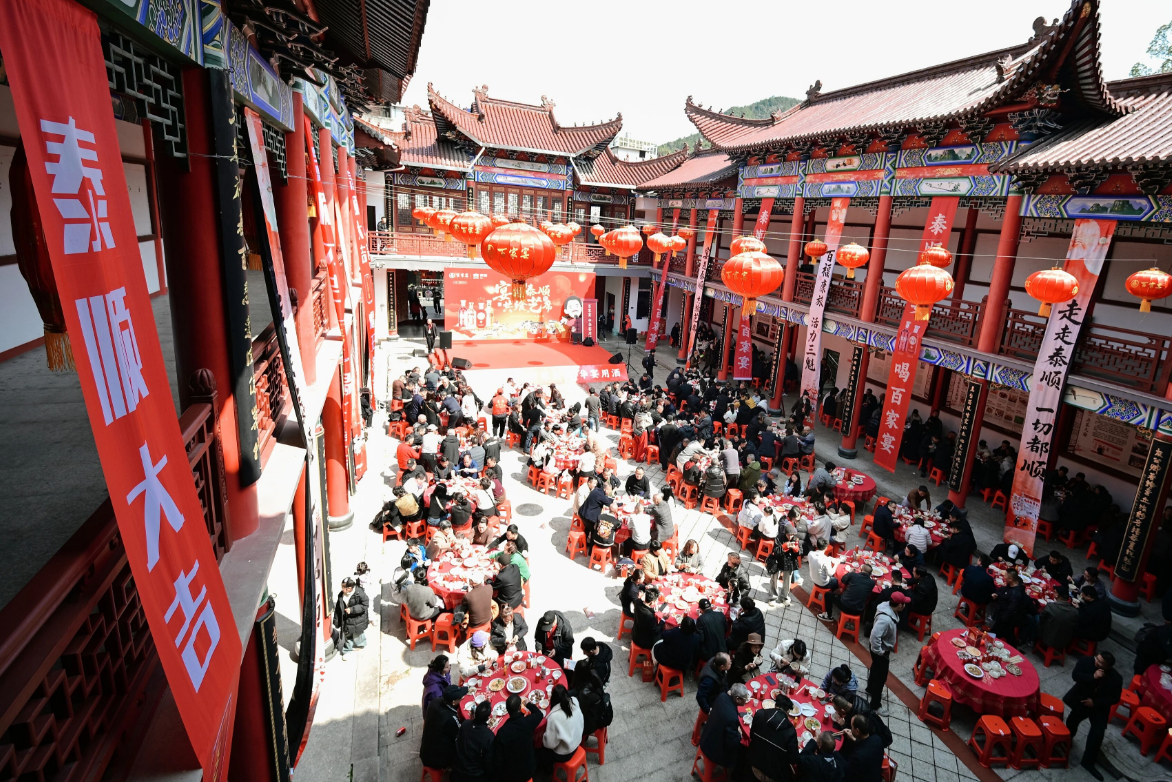
The Hundred-Family Feast: from ancestral hall to ten thousand diners. The most emblematic Lantern Festival tradition in Wenzhou is Taishun's "Hundred-Family Feast." It began as the Zhang clan's ancestral-hall banquet in Zhangzhai Village, Sankui Town, and grew into a county-wide event with a history of more than 800 years; in 2009 it was inscribed on Zhejiang's intangible cultural heritage list. Every Lantern Festival, Sankui Town lines its streets with hundreds of banquet tables, drawing nearly ten thousand residents and visitors to eat together. Fifteen dishes are served, and between courses come heritage performances — the Stepping-Stone Dragon dance, puppet shows, the Eight-Treasure Lantern dance.
The feast traces its roots to a "Spring Sacrifice" blessing: around the Beginning of Spring, clan elders chose an auspicious day to worship ancestors at the ancestral hall, then make offerings to Chen Shisi Niangniang at the local temple, then share a meal — a ritual for good weather and good harvests. Over time it became the Lantern Festival banquet that welcomes everyone, kin or stranger, rich or poor. The name says it all: hundreds of households, seated along the same long street, eating from the same pot.
The She long-table banquet: mountain hospitality. In Wencheng County, the She ethnic community marks the festival with a long-table banquet, the highest form of hospitality in She tradition — usually reserved for weddings, full-month celebrations and village gatherings, and on festivals opened to all comers. Along a hundred metres of tables, four people share a small bamboo basket of She specialties: black rice, glutinous rice cakes, paddy-field fish with river snails, red yeast rice wine. The meal comes with She songs and dances, because in Wenzhou, eating and watching have never been separated: at the Hundred-Family Feast there are puppet shows and dragon dances; at the long-table banquet, She folk songs. You eat while the stage warms up, and watch while another ladle finds your bowl.
"Sharing the Fifteenth Night": sweetness in children's pockets. In the Jiangnanyang area of Cangnan County, the festival belongs to children. Households that celebrated a wedding, a new house or a birth during the past year put out snacks on low tables at their gates — peas, peanuts, fried rice, white sugar, water chestnuts, sugarcane. Children wearing clothes with oversized pockets go door to door, calling out "Granny! Auntie!" and the sweeter the greeting, the fuller the handful. By evening, four pockets bulge with enough treats to last days. The custom has another name: "begging for cleverness" — the snacks are said to sweeten the tongue, steady the hand and sharpen the mind.
Wenzhou people say the New Year passes easily; the days after are the ones that test you. Once the Lantern Festival is over, the year is truly done, and the remaining three hundred-odd days must be lived one bowl of rice at a time. The banquet was never just about food. The lanterns fade and the tables clear, but the act of coming together — that, Wenzhou will not let go.