

Wenzhou people do not stop eating when the sun goes down. According to the local restaurant association, evening meals and late-night snacks account for well over sixty percent of dining in the city, and the restaurant trade takes in nearly 20 billion yuan a year. For visitors, five recurring moments structure that appetite.
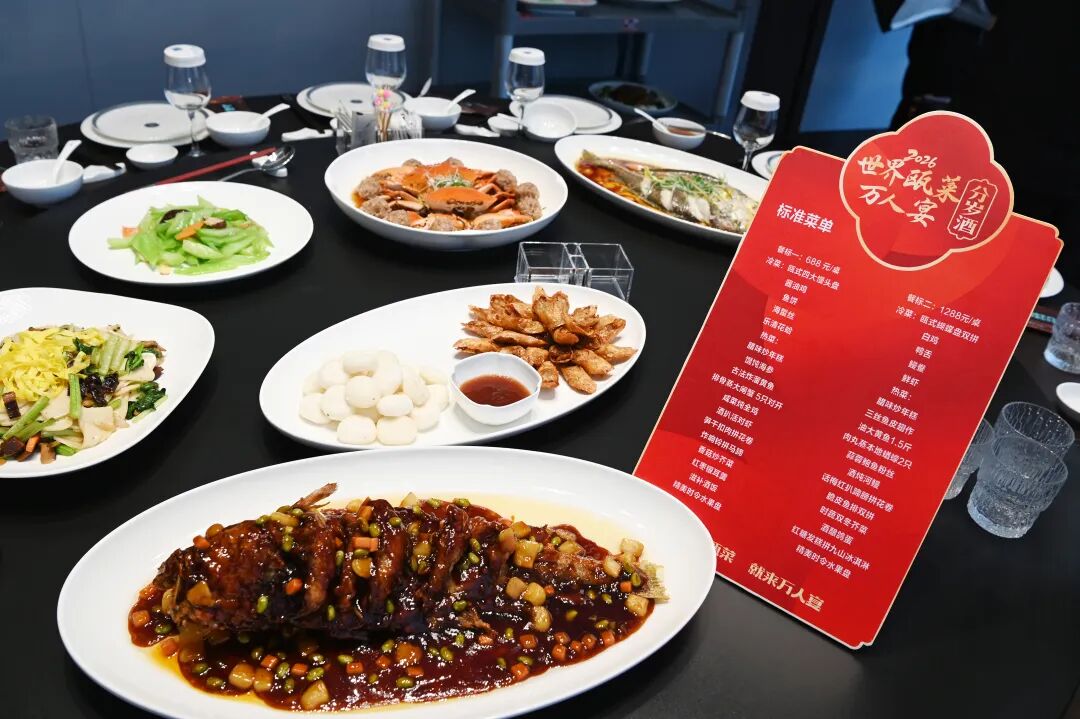
The World Ou Cuisine Feast, every January. Each winter, the city sets one enormous table. The 2024 edition — the seventh — ran on January 26-27 across Lucheng, Longwan, Ouhai, Dongtou and beyond, with 1,771 tables available for local families to book. The menu was drawn up by hotel executive chefs together with senior Ou Cuisine masters Ye Guoguang and Yao Rongsheng. Government subsidies and restaurant discounts brought the price down to 580 yuan per table at lunch (from 980) and 980 yuan at dinner (from 1,580), drinks not included. A sample lunch menu shows how an Ou banquet runs: a four-part cold platter of white-cut chicken, fish cakes, jellyfish and pressed pork trotters; then fried rice cakes with cured meat, steamed whole yellow croaker, crabs steamed with spare ribs, and a sweet osmanthus-egg soup to close.
Michelin and Black Pearl, every winter and spring. Wenzhou now appears on both of China's most-watched restaurant guides. In January 2026, three Wenzhou restaurants were named one-diamond venues on the Black Pearl list — including Jiangxie Sheng, the city's signature raw marinated crab, chosen as a dish of the year. Two months later, the MICHELIN Guide issued its first Shanghai-Jiangsu-Zhejiang edition, and Wenzhou appeared for the first time: 19 Bib Gourmand venues, mostly the street shops locals grew up with — pork-rice-noodle stalls, fish-ball shops, wonton stands — plus five restaurants on the main MICHELIN Guide selection. The reviewers came anonymously, booked and paid like anyone else.
The Qixi Feast on Dongtou, late summer. Around the seventh day of the seventh lunar month — the night Chinese call the Double Seventh Festival — the fishing village of Dong'ao on Dongtou island lays out a communal feast on its beach square. It is a coastal community's way of marking the year: tables on the sand, the sea behind them. (The 2025 edition, reported locally, took place on August 30.) Date and programme should be confirmed before travel, but the scene itself is the draw — an island banquet that belongs to summer's end.
Jiangxie Sheng, the dish of the year. The Black Pearl guide's annual pick turned the spotlight onto a single dish: Jiangxie Sheng, raw marinated swimming crab. It is a cold plate made from live crab from the East China Sea, chopped into pieces and soaked in vinegar, soy sauce and rice wine for half an hour to an hour — glossy and translucent, tasting of sour, sweet, savoury and fresh at once. Wenzhou banquets have served it for generations; the writer Lin Jinyuan once observed that Wenzhou cooking preserves the original taste of ingredients and favours raw food, and Jiangxie Sheng combines both. A'wailou Grand Hotel, where the dish was named a Black Pearl dish of the year in 2026, is one place to try it. Wenzhou diners often pair it with baijiu.
Night markets, all year. The city's late-night appetite has organised itself into fixed markets. Longxia Night Market, a hundred metres from an S1 rail station, mixes Chaoshan raw-marinated seafood and northeastern barbecue with local stir-fried snails and rice noodles. Nanliu Night Market, next to the university town, leans young. Qidu Night Market sets up as a camp-style open-air site where barbecue sits beside Wenzhou wheat cakes, wontons and almond tofu. In Ouhai district alone, seventeen regulated night markets host more than a thousand stalls and draw an average of 110,000 visitors a day.
For a traveller, the rule is simple: come in winter for the feast, watch the guides in early spring, time a trip to Dongtou for the Qixi feast, ask for Jiangxie Sheng at the tables where it is served, and on any other night, follow the smell to the nearest market.