

Story
"I never liked wheat-based foods as a child, but Yongjia wheat cake was the only exception," says Jin Xiaorong.
In 1998, she and her husband moved abroad to build a new life. From then on, the wheat cakes of her hometown became an enduring daily craving — a taste of homesickness that never faded. In her kitchen overseas, she tried countless times to make them herself, but "they just never came out quite right."
At the end of 2022, taking advantage of a trip back to her hometown, she apprenticed herself at a local wheat-cake shop. Two hundred and fifty grams of wheat flour, an egg, and a spoonful of vegetable oil — mixed and kneaded, pressed into a bowl shape, stuffed with preserved greens, fresh pork, and dried shrimp, then flattened and pan-fried to a golden crisp on both sides. She committed this thousand-year-old Yongjia craft to memory, bit by bit, through her own hands.
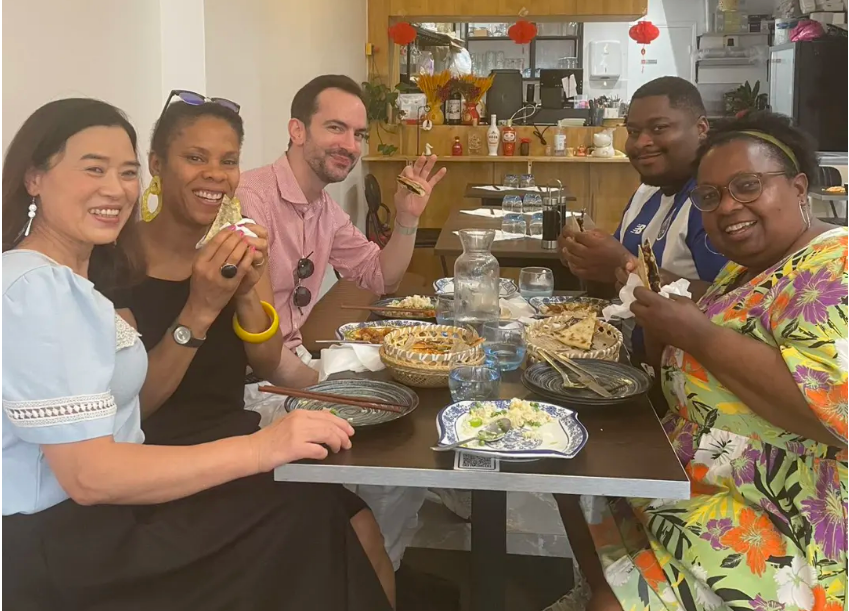
Upon returning to Paris, Jin opened a restaurant named Renjian Yanhuo ("The Smoke and Fire of Everyday Life") in the Chinatown quarter near the Pompidou Centre. Yongjia wheat cake became the signature dish, priced at 6.5 euros. "I source the preserved mustard greens directly from China," she says. "Every morning, I mix the filling and knead the dough myself — the freshly cooked cakes smell wonderful."
During the 2024 Paris Olympics, a long queue stretched in front of her counter as diners from across the globe arrived to sample the delicacy. "Many foreign customers were trying them for the first time, so we explained the texture and suggested they start with half a piece. Quite often, after finishing the first half, they would immediately order another."
One day, a young man walked into the shop recording a video on his phone while speaking the Wenzhou dialect. He ordered a wheat cake, then marvelled aloud in his native tongue: "This is our authentic Wenzhou wheat cake — I never imagined I'd be eating this in Paris!"
"When I heard him say that, I was deeply moved," Jin recalls.
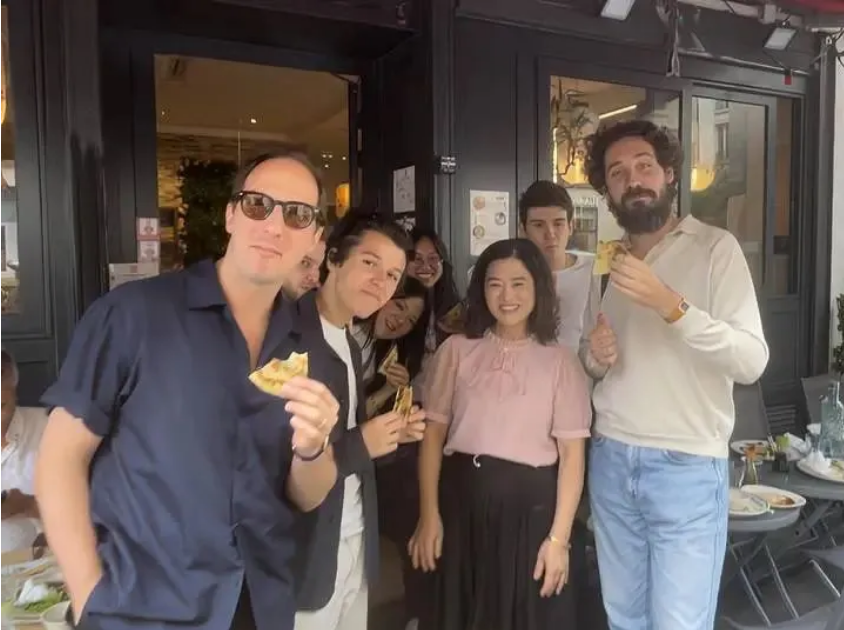
Alongside wheat cakes, her restaurant serves jinfen sweet-potato noodles, glutinous rice, stir-fried rice vermicelli, and tender pork strips. Yet the wheat cake remains the absolute must-order on every table. Driven by Wenzhou's vast overseas diaspora, the Yongjia wheat cake has long expanded beyond a simple taste of home: in the Chinese restaurants of Prato, Italy, it is affectionately called "Chinese pizza," and its inviting aroma has spread just as far across Spain and the United States.
From a modest mountain town to a global metropolis, this thousand-year-old cake was carried across oceans by a Wenzhou woman, baking the warmth of her hometown into the daily life of Paris.