

Story
Maitiao'er is a traditional noodle from southern Zhejiang, known as "Maitian'er" in the Wenzhou dialect. Made from wheat flour and pulled by hand, it has long been a favourite among people living in the hills along the Nanxi River. In the past, almost every household knew how to make it — a quick meal during the busy farming seasons and something to serve guests at home. Unlike the noodles commonly sold in shops, Maitiao'er has a texture all its own: fragrant and chewy, with a distinctive wheat flavour. The method looks simple: roll out the dough, cut it into strips, then stretch each strip between your hands. But as Wu Shunhui puts it, "Maitiao'er may look simple, but every step takes skill — from kneading the dough to making the broth." That gap between its simple appearance and the skill it takes to make it has kept Wu studying and preserving the craft for most of his life.
For Wu, making Maitiao'er is about learning to listen to the dough. He often says, "Dough has a life of its own." Over four decades, he has systematically documented what he has learned. Since 2016, he has documented the entire production process and preserved it digitally — not simply as a record of a craft, but as an effort to preserve an entire food tradition.
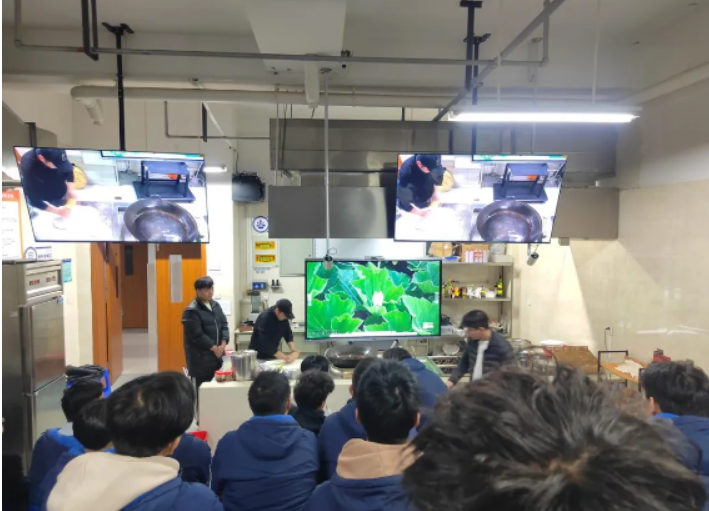
As an inheritor of intangible cultural heritage, Wu has also made passing the craft on part of his work. He has trained more than a dozen apprentices, including Ye Jianhai and Liu Yinglong, passing the craft on to a new generation. In 2025, he gave a public lecture, "The Craft of a Bowl of Maitiao'er", to students studying culinary arts at Wenzhou Technician Institute. In the culinary training room, he explained each step in detail — kneading, resting, beating and stretching the dough. As the students practised in groups, he moved among them, patiently correcting their mistakes. "Beat the dough unevenly and the surface will be rough," he told them. "Stretch it too quickly and the noodle will break." At the end of the class, he shared the finished noodles with the students to taste, and told them: "To pass on intangible heritage, you have to respect the craft, be willing to work quietly, adapt to change, and never lose the memory of home." One student filled a notebook with notes and said in surprise: "I never realised intangible heritage was all around us. There's so much knowledge behind a bowl of food."
Wu has always believed in preserving what matters in the traditional craft while allowing it to evolve — keeping its essential techniques, reworking classic dishes with local ingredients, and using the craft to connect the old with the new. As Wenzhou works towards becoming a World Capital of Gastronomy, Wu is keeping alive, one bowl at a time, a taste that generations of Wenzhou people have known as home.