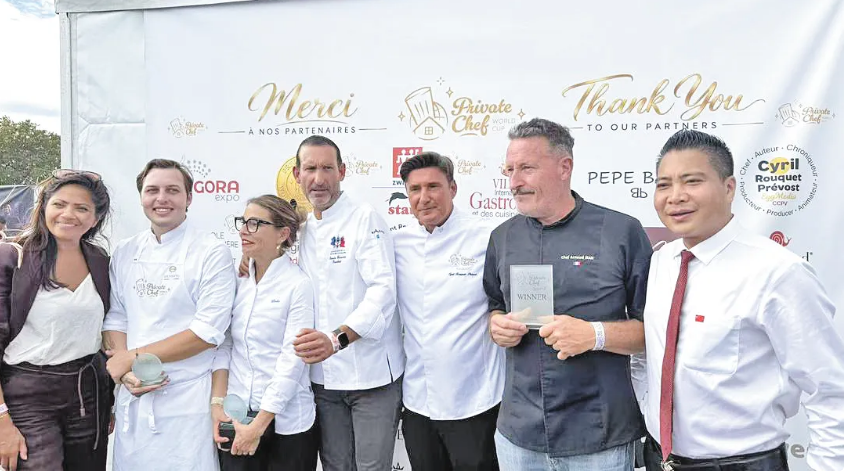
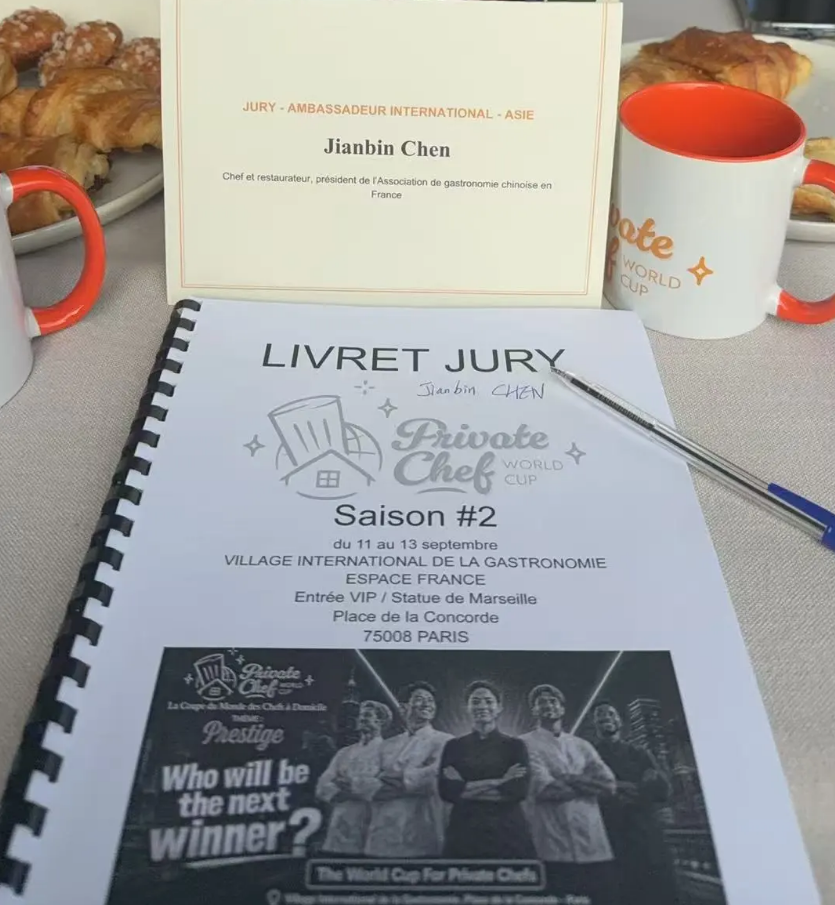
Paris's Private Chef World Cup had never had a Chinese judge on its jury — until this year. Chen Jianbin became the event's first Chinese judge, named its Jury Ambassador for Asia. Around the table sat some of the most influential figures in French gastronomy, including a chef from the office of the French prime minister.
It took him thirty years to get there, and the journey began in a different world.
Chen grew up in Yongjia, in the Oubei area, where his father worked as a tailor known across the region in the 1970s and 80s. Asked why he chose the kitchen over other trades, he says it was sheer love of the work. At thirteen, through a friend of his father's, he entered the Wenzhou restaurant industry as an apprentice. He was diligent to a fault — staying on to work the Spring Festival nights while others went home, juggling hundreds of tables with a dozen colleagues. By nineteen he had taken gold at Wenzhou's first skills competition; he went on to become the city's youngest executive chef, earning 12,000 yuan a month at a time when classmates made five or six hundred. His family initially worried that the work was too demanding and did not support his choice. They changed their minds only after seeing what he had achieved..
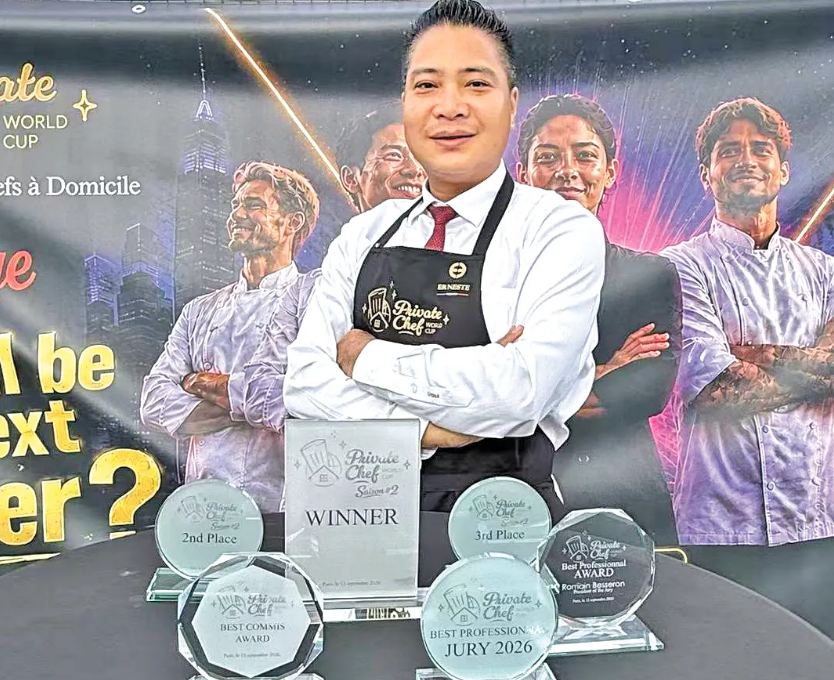
In 2003 a hotel group in France invited him to Paris on a two-year contract. His mother urged him to come home when it ended; he told her he would not return until he had made something of himself. The second year he went into business alone, opening a Japanese restaurant. To save money he did every job himself — one day, when the delivery rider called in sick, he took the motorcycle out, crashed, and stitched his chin while a broken foot was put in plaster. Orders were still piling up, so he took a taxi back and kept going with his leg up on a chair.
The first shop built a name, and more followed, including a large Sino-French hotel partnership. It was the kitchen that taught him to belong in France. He hired French cooks, and through the daily exchange learned both French cuisine and the language. Unhurriedly he moved from a circle of Chinese expatriates into the mainstream of French cooking — and founded a family there.
His cooking still carries home with it. Steamed grouper, a signature dish, was sliced and arranged into a delicate platter for local tastes — the aroma winning over diners in a single bite. Where many Chinese restaurants sold braised pork cheaply, he adapted Wenzhou's Dongpo pork as a small, single portion priced around 12 euros, betting that culture, not bulk, is what people will pay for. And he has carried the flag outward: in 2012 his dish "Hundred Birds Return to the Nest" took gold at the international competition held at Beijing's National Stadium; in 2015 he was the only overseas chef in the delegation presenting Chinese cuisine at UNESCO headquarters in Paris.
Chen returns to China at least four or five times a year. He would like to bring the French International Culinary Federation back to Yongjia to hold a food festival — to introduce his hometown and carry its products abroad. "Only when you go abroad," he says, "do you understand that your own food culture is part of your country's confidence." There is, in his telling, no border to good food; it survives on both cultural depth and generation after generation of cooks who keep changing it.
From Wenzhou to France, from apprentice to judge, he has been doing one thing: telling China's story with taste, and letting the world meet Zhejiang, Wenzhou and Yongjia through the tongue.