

What does a "national" label for an agricultural product actually certify — and why does Dongtou's croaker qualify?
The mark is given to products that are sharply local, fine in quality, rich in nutrition and trusted in the market; Dongtou's croaker earns it through the island’s marine ecology, deliberately low-density farming and quality control that runs the whole chain.
The mark means "good, and unmistakably local." The national "Famous, Special, Excellent and New" list is drawn up by the quality and safety center under the Ministry of Agriculture and Rural Affairs. A product must be richly tied to a place, well-grown, nutritious and well received. Being listed lets Dongtou use a public recognition mark for a regional shared brand and wider markets. For Dongtou, the croaker is its second signature fishery product to carry the mark, following the laver — and the two begin to stand together as an island's answer.
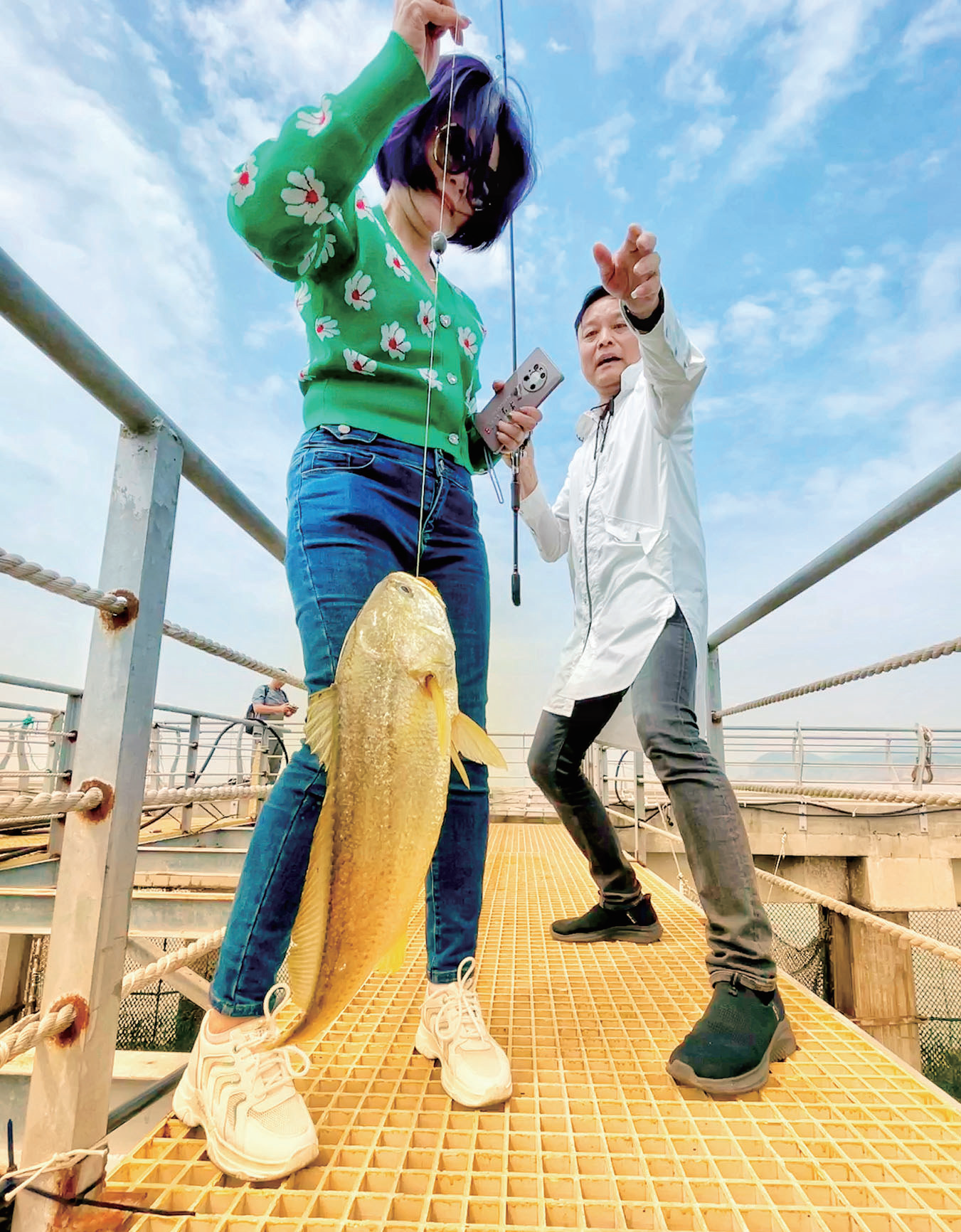
Built from the coast up. Dongtou's waters are threaded with rocky islets, well-exchanged currents, fitting salt content and abundant natural feed — ecology that suits the large yellow croaker from the start. On that base the district applies modern methods: deep-water net cages, fenced ecological pastures and sound-wave sea ranches, all farmed at deliberately low density to mimic wild conditions. The payoff is the fish itself — a golden skin, firm flesh and a clean flavor that consumers keep coming back to.
Quality guarded end to end. Around the product, Dongtou closes every gap. It keeps local standards for farming technique and product grading, verifies inputs, tests at origin and tracks products back to their source, wiring fry breeding, sea farming, refined processing and marketing into one chain. At its core sits Luxi township, where fishery businesses are fostered and fish processing is joined to coastal tourism — a combination that is helping increase fishermen’s incomes and allowing more island communities to share in the value created by the industry.
A national recognition is short and easy to state, but it is a promise a region must keep. Dongtou did not pursue the mark for its own sake. It first allowed the island’s waters, its low-density farming methods and its careful production chain to speak for themselves. The mark then became a way of telling the wider market what Dongtou’s sea can produce.