

The Bamboo Branch Song is a folk poetic genre originating in ancient Shu (the region of present-day Sichuan), defined by its mission to “record local customs and describe everyday practices”. Later favoured by Liu Yuxi (772-842, a poet of the Tang dynasty), it gradually became popular among the literati. Written in plain language and full of everyday warmth, these poems were also widely welcomed by ordinary people. Over the centuries, scholars and poets across the country took up this poetic form. Those who excelled at it naturally gave their Bamboo Branch Songs regional labels.
In southern Zhejiang, this verse form became known as the Wenzhou Bamboo Branch Song. Since the 800-li Oujiang River (about 400 kilometres; the li is a traditional Chinese unit of distance) is the mother river of the people of Wenzhou, it is also called the Oujiang Bamboo Branch Song. Its subjects, as usual, include clothing, food, housing and travel, with particular emphasis on the food served at ordinary people’s tables. The local customs revealed in these verses undoubtedly stir powerful memories of regional culture.
There was a time when Bamboo Branch Songs were widely recited in the villages and lanes of Wenzhou; even country folk and mischievous children could memorise a few lines. Their authors, however, needed genuine learning and literary ability. Many were officials and celebrated writers, including Zhang Youxin, Ye Shi, Yang Pan and Liu Ji, all leading figures of their respective eras. For them, composing Bamboo Branch Songs was an effortless pastime, comparable to music, chess, calligraphy and painting. Chanting a few lines in their leisure brought them considerable pleasure. A meal at a tavern or a visit to a scenic spot could inspire a poem. In this respect, Bamboo Branch Songs resemble WeChat Moments or Douyin (Chinese Tiktok) today: they record an experience while also allowing the writer to offer personal reflections. The customs and social life of old Wenzhou captured in these poems also provide later generations with valuable historical material.
Honey fills each chamber, clad in golden rind; Amber wine pales, its richness left behind. Fine furs and raven-hued shoes bring little cheer, Better orange and pomelo toast spring’s cheer.
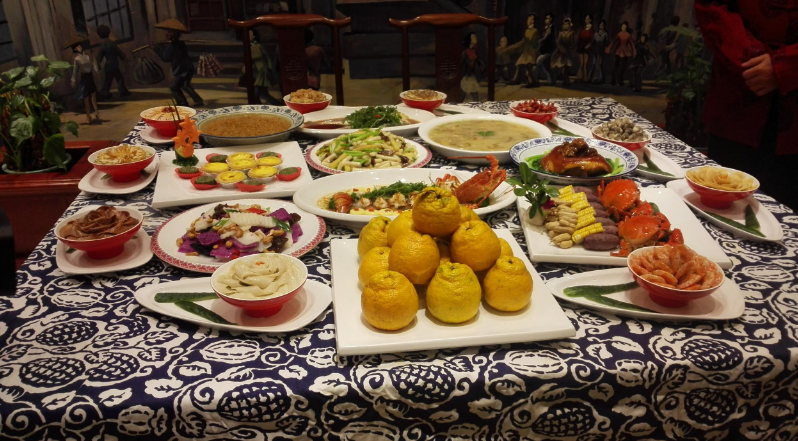
This is Ye Shi’s Orange Branch Song from the Song dynasty (960-1279). Orange Branch Songs and Bamboo Branch Songs are essentially the same poetic form, differing only in name. The Ou mandarin is undoubtedly one of southern Zhejiang’s most important local specialities. It has a thick peel, tart juice, a slight bitterness and a sweet aftertaste. It is a fruit that the people of Wenzhou have enjoyed continuously from the Tang and Song dynasties to the present day. In other words, the Ou mandarin that Ye Shi tasted belonged to the same lineage as the one you can peel on the streets of Wenzhou today, carrying an unmistakable flavour of home. When the Southern Song (1127-1279, the period after the Song court moved its capital south to Lin’an, present-day Hangzhou) established its capital at Lin’an, Emperor Gaozong visited Baicheng twice. Wenzhou effectively became the imperial capital’s back garden, and local delicacies such as Ou cuisine naturally became tribute items (local products presented to the imperial court). During his tenure as an official in Wenzhou, Han Yanzhi, son of the celebrated Southern Song general Han Shizhong, wrote Record of Oranges. In the book, the Ou mandarin is described as a tribute fruit. This shows that, in the Song dynasty, this southern Zhejiang speciality was already famous in the imperial capital.
In Guo Zhongyue’s Qing-dynasty poem Ice Chamber Studio, white ark shells and Ou mandarins appear together, one from the sea and one from the hills, one savoury and one refreshing, like an appetiser for the palate:
Wine flows warm in Ice Chamber Hall; fresh white ark shells grace the plate. Lingering drunkenness still weighs at dusk; I ask another hand to peel the Ou mandarin.
Besides the Ou mandarin, the white ark shell mentioned in the poem, known in Wenzhou as the flower ark shell, has a story of its own. Some people affectionately call it the blood ark shell and, in a figurative sense, praise it as a food that replenishes the blood. Before it is washed, the flower ark shell is covered in wet mud, which explains its other name, mud ark shell. Once cleaned, its ridged shell is bright and white, and rather charming.
The small boat for the elderly couple rides the tide, Beneath one lonely awning, they abide day and night. Glad the dragonhead fish tribute is repealed; Beneath mirror-smooth seas, ark shell seedlings are sealed.
This poem by Dai Wenjun depicts marine farming in Wenzhou. A native of Jiashan in Zhejiang, Dai came to Wenzhou with his father, who was an official, during the Tongzhi reign of the Qing dynasty (1862-1875). His description of the farming scene shows that ark shells were already part of everyday life in ancient Wenzhou. Today, the same sea and ark-shell farms can still be found along the coasts of Yueqing and Rui’an. The meat of the flower ark shell is tender: blanch it briefly, add no oil or salt, and dip it in soy sauce and vinegar to enjoy its vivid, blood-red freshness. An awkward mistake is that the character for ark shell is often written as the character for clam. Ark shells and clams are different shellfish, and their names are pronounced differently. Although Dai Wenjun did not often write directly about food, his poem about a river sacrifice for fish and shrimp is full of charm:
Drums beat by the river; sacrificial texts are read aloud. Fish and shrimp are titled great generals, proud. A thousand lamps light the bright shrine hall, Waking the Dragon King mid-wine, one and all.
During the Qing dynasty (1644-1911) and the early Republican period (the early years after the Republic of China was established in 1912), Bamboo Branch Songs reached the height of their popularity in Wenzhou. This was their golden age in the region, producing a large number of poems celebrating southern Zhejiang and presenting a comprehensive picture of the customs of old Wenzhou and the everyday lives of its people. Naturally, the delicacies on their dining tables were also praised in rhythmic verse.
The swimming crab is plump, well worth boiling; The shore crab’s fine pincers are not for toiling. Learning classics is not the sole pursuit, Lest you mis-take shore crab for swimming crab, fruitless.
This is another Bamboo Branch Song by Guo Zhongyue. Guo was an official appointed to Wenzhou from elsewhere. He once served as a sima (a traditional official title, often associated with military or administrative duties) and later settled in Wenzhou for the long term. He admired his predecessor Xie Lingyun’s passion for travelling through mountains and rivers and used Bamboo Branch Songs to express a similar spirit. His poems were not limited to landscapes; many captured the vivid life of the streets and markets. The swimming crab in this poem refers to the green crab, a famous Wenzhou seafood that was particularly renowned in earlier times around Lingkun and Yongjiachang.
He also wrote a poem entitled The Sea as Farmland:
No mending fishing boats upon the cliff; When winds abate, fresh catches bring joy, swift. Riding the tide from dawn till dusk each day, Ten thousand acres of blue sea become farmland alway.
What is called “the sea as farmland” would today be known as tidal-flat aquaculture. Razor clams, flower ark shells and mud snails are among the delicacies harvested from the tidal flats. The poem reveals the defining character of the Ou people (the ancient inhabitants of the Oujiang region): relying on the sea for fresh food. Guo was clearly a keen eater, and his Bamboo Branch Songs never overlooked the local specialities of southern Zhejiang.In one poem, “Xishi’s Tongue”, he praises the flavour of Wenzhou hard clams:
Xishi’s tongue still retains its fine aroma; Seafarers come again and again to savour its drama. Though not from Ruoye Stream, it dares to show its grace, Before King Wu, revealing its tender face.
Comparing clam meat to Xishi’s tongue conveys just how enticing its freshness must be. Set between mountains and sea, Wenzhou is rich in celebrated mountain and sea delicacies. The winding 800-li Oujiang River teems with aquatic resources. As Zhejiang’s second-longest river, running across the ancient land of Ou, it possesses the grandeur and beauty captured in the phrase “the tidal flats hold jade that glows, while the waters carry pearls and lend beauty to the river”. This helped earn Wenzhou its reputation as a land of fish and rice. The Oujiang has abundant aquatic produce and a long fishing heritage. Local gazetteers compiled from the Hongwu reign of the Ming dynasty (1368-1644) to the Qianlong reign of the Qing dynasty record 45 native fish species, including carp, perch, eel, tonguefish, tapertail anchovy, mullet, catfish, shad, sweetfish, fighting fish and grouper. Other aquatic creatures include soft-shell turtles, turtles, crabs, shrimps, clams and freshwater mussels.
The tapertail anchovy, also known as the phoenix-tail fish or ci fish in ancient texts, is celebrated in one of Guo Zhongyue’s poems:
Peach blossom waters warm; tapertail anchovies grow plump, Their flavour surpasses those south of the Yangtze, lump for lump. At dusk, nets are cast beneath Lonely Islet; Silver knife-like fish leap, snowflakes to beguile.
Tapertail anchovies are not exclusive to Wenzhou; the Yangtze tapertail anchovy, one of the “Three Yangtze Delicacies” (the three celebrated seasonal fish of the lower Yangtze), belongs to the same group. Su Shi (1037-1101, the celebrated Song-dynasty writer also known as Su Dongpo) once wrote: “Are there still southern landscapes? Peach-blossom waters hold plump tapertail anchovies.” Named knife fish because of its blade-like shape and silvery scales, it is regarded as the foremost of the three river delicacies. In southern Zhejiang, the phoenix-tail fish of the Oujiang is also exceptionally tasty. Around the Dragon Boat Festival (a traditional festival held on the fifth day of the fifth lunar month), female tapertail anchovies known as “egg anchovies” swim upstream in groups to spawn in the rapids behind Lonely Islet, when they are at their fattest. From a modern ecological perspective, however, fishing during the breeding season is unsustainable.
Fang Dingrui, another poet of the Oujiang Bamboo Branch Songs as renowned as Guo Zhongyue and Dai Wenjun, served as the Circuit Intendant of Wenchu (a senior Qing-dynasty official responsible for the Wenzhou and Chuzhou region). During his six years in Wenzhou, he composed many poems celebrating the region. His poem about the Water Gate, today’s Ancient Harbour Riverside Park, reveals the prosperity of night markets in ancient Eastern Ou (the historical name for the Wenzhou region):
Midnight lamps glow through window lattice; night markets thrive like daytime fairs. Though seven city gates are locked after curfew, light boats still pass through Water Gate without cares.
Fang also wrote about bumper catches of hairtail in his poem Yangfei’s Sash. In those days, Yuhuan belonged to Wenzhou territory. Comparing Yuhuan’s long silver hairtail to the sash of the imperial consort Yang Guifei (the famed consort of Emperor Xuanzong of the Tang dynasty) is a delightful literary fancy:
Large ships from Yuhuan raise banners one by one; All pray the sea yields abundant catches this run. Fishing boats return trailing white ribbons of hairtail; Poets weave tales of the imperial consort, without fail.
Guo Zhongyue, Dai Wenjun and Fang Dingrui were outsiders who came to experience the region and were curious about its local customs. Drawing on what they saw and heard, they incorporated local dialect expressions into quatrains and recorded their travels through descriptions of the landscape and local products. Their poems therefore possess considerable historical value for research into Wenzhou’s history and culture. Among the authors of Bamboo Branch Songs were also native Wenzhou literati, or more precisely, local writers deeply familiar with regional legends, historical anecdotes and customs, such as Zhang Qiwu and Yang Danfeng. Their Bamboo Branch Songs are, in another sense, authentic local gazetteers of customs.
Sea moon shell and pen shell carry purest taste; Octopus and squid make fine soup, not to waste. Do not crave Xishi’s breast; The puffer’s fame is empty, at best.
This poem, entitled Wenzhou Seafood, comes from Zhang Qiwu’s Boat Colony Fishing Ballads. A native of Pingyang, Zhang spoke of seafood with intimate familiarity. In merely four lines, he lays out a feast of East China Sea treasures: sea moon shells, pen shells, octopus, small squid and pufferfish. Paired with a sip of old rice wine and a dip of soy sauce and vinegar, it captures the simple pleasures of life.
Zhang excelled at depicting the food culture of old Wenzhou through Bamboo Branch Songs. Frost Crabs:
Faint starlight glimmers by crab shed lanterns; clear water winds beside the city wall. When autumn frosts and west winds blow hard, nets bring in frost crabs; market prices rise all.
Golden Mandarin Orange:
Gardeners pick fresh oranges after frost; poems of oranges fill boats right away. Who knew during the Xuanhe tribute years, one fine mandarin cost two thousand coins a day?
Croaker:
Knocking sounds reach the rustic cottage; moss grows thick along the winding path. No letter came yesterday; guests are served two croakers, fresh from the bath.
Shishou means yellow croaker; the name literally means “stone head”, referring to the otoliths (stone-like structures in the fish’s head). Serving wild yellow croaker to guests would be considered an extravagant gesture today. During the yellow-croaker season in Qing-dynasty Wenzhou, the fish was sold throughout the streets and was so inexpensive that even poor people could taste it. Although yellow croakers are now far more expensive, the people of Wenzhou remain deeply attached to them and still prepare them in the same straightforward ways, either with spring onion oil or braised with rice wine. The fish’s fate, however, was closely linked to its otoliths. In earlier times, fishermen caught yellow croakers by “beating the clappers”, striking the surface of the water to stun the fish below and drive them into the nets.
Zhang Qiwu also wrote a memorable poem praising swimming crabs:
No need for chrysanthemum bloom to savor crab; its taste outshines every soup. Eat alongside Zhancheng rice; why seek moonlight from the East China Sea’s group?
Swimming crabs were premium guests on Wenzhou dining tables. The coastal waters of southern Zhejiang suited their growth, and fishermen caught them readily. Modern Wenzhou cooking of swimming crabs remains largely unchanged from Zhang Qiwu’s era: steamed or stir-fried with ginger and scallion, releasing irresistible rich aroma.
Among the local authors of Bamboo Branch Songs, the most prolific was Yang Qing. Yang Qing, whose courtesy name was Danfeng, was a native writer born in the late Qing dynasty. His Bamboo Branch Songs are rich in the character of a local gazetteer, covering a wide range of subjects and brimming with a lively cultural personality and a strong sense of place. In his view, this southern Zhejiang land, backed by mountains and facing the sea, was blessed with fish, shrimps, clams and shellfish throughout the year as the tides rose and the rivers swelled. One might say that whenever the wind blew, the air was filled with the scents of the sea, spring onions and sweet glutinous rice.
Buy mandarins, tangerines and water chestnuts; razor clams, shrimps and clams in bulk. Buy several jin of red radishes, and round-bellied red roe swimming crabs to cull.
As the New Year approached, people were busy preparing festive provisions. The “round-bellied” crab was the female crab, its shell packed with red roe, the most eye-catching seafood of the year’s end. Yang Danfeng naturally did not overlook such a scene. When the Dragon Boat Festival arrived, his verse was equally lively:
Eggs, Ou mandarins and white rice dumplings are eaten at dawn with hearty appetite.
For lunch, there were “thin pancakes with eel filling, packed generously inside”. These pancakes are thin enough to be almost translucent. Within them, strips of meat and eel, bean sprouts and mushrooms appear and disappear, teasing the tongue and awakening the appetite.
Mustard wards off ailments, as the old saying goes; eat mustard rice to avoid scabies. Rice cooked with mustard, shrimp tails and diced pork; neighbors urge each other to eat heartily.
This is Yang Danfeng’s description of the Wenzhou custom of eating mustard-green rice on the second day of the second lunar month. A popular saying holds that “after eating mustard-green rice, you will not suffer from skin sores for the rest of the year”. Mustard greens mixed with dried shrimps and diced meat are folded into rice, giving every grain a savoury depth and filling the mouth with fragrance. Yang Danfeng says nothing about nutrition; instead, he writes that “everyone urges everyone else to eat a little more”, allowing human warmth and social feeling to rise visibly with the heat from the kitchen stove.
Other writers including Shi Fanglu, Zhou Yide, Zuo Jin’e and Wang Jidan also composed poems of old Wenzhou street life. While fewer of their works focus on food, several fine pieces survive. Shi Fanglu’s Wheat Cake for Supper:
Wheat cakes scent villages in the fourth lunar month; peasant girls talk of adding sugar frost. Tomorrow her husband heads into town; cakes stored in cloth bags sustain him across the cost.
Nanxi wheat cakes are famous past and present, a tourism icon today. Stuffed with preserved mustard greens and diced fatty pork, baked golden over charcoal, they are crispy outside and fragrant within. In Shi Fanglu’s time, wheat cakes were portable food for travellers. Country folk carried them as dry rations; when climbing mountains, taking a bite refreshed their spirits.
Bamboo Branch Songs never grow old, and Ou cuisine stays vibrant. The mountain and sea delicacies of southern Zhejiang still wait for guests in alleyways. Looking back, through the Bamboo Branch Song by Yang Pan of the Northern Song Dynasty, we still glimpse the prosperity of ancient Eastern Ou:
When lantern festivities end, song and flute resound loud and clear. The moon shines equally over thirty-six wards tonight, full and near.