

Zhejiang's Marine Aquaculture Research Institute has developed a new use for the first-harvest laver it collected off Dongtou, Wenzhou: a functional protein drink. Behind the bottle is a broader plan to turn laver — long sold to processors in other provinces as a low-cost raw material — into higher-value products on Zhejiang's own coast, with potential applications in liver-health products, cosmetics and even medical and pharmaceutical uses.
Why has Zhejiang's abundant laver remained stuck as soup or raw material — and what could a protein drink change?
Selling laver whole at low prices leaves too little value; by breaking open the seaweed's cells and extracting its protein and pigments, the institute is turning the same laver into a drink, exploring its potential for liver health and developing a route to high-purity phycoerythrin.
The limits that shaped the laver trade. Laver (Porphyra haitanensis) is a commercially important edible seaweed grown along China's southern coast. It is rich in protein, polysaccharides, phycobiliproteins and minerals. Favorable growing conditions and well-established farming have kept Zhejiang's output among the highest nationwide for many years. Yet high processing costs and low added value at home have meant that much of the harvest is bought by processors in Jiangsu and Fujian, leaving Zhejiang's own supply chain short and underdeveloped. Turning laver into a drink is an attempt to keep more of its value in the province.
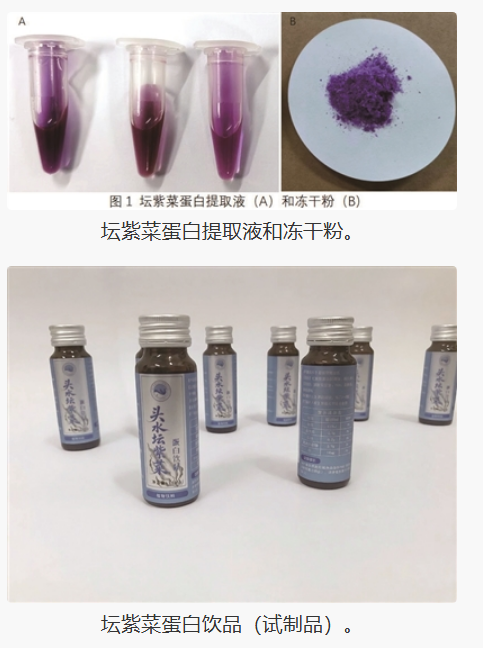
Breaking the cells to release the protein. The institute's water-quality and safety team, led by senior engineer Lu Rongmao, began developing a protein drink from first-harvest laver (the season's first crop) in June last year, using laver collected in Dongtou District. The process involves repeated freeze-thaw cycles, low-temperature grinding and ultrasound-assisted cell disruption, followed by centrifugation, filtration and low-temperature freeze-drying to produce a dried laver protein powder with antioxidant properties. The yield is modest: 100 grams of fresh laver produces only about 2.4 grams of powder.
The next generation is aimed at liver health. A second-generation drink is planned around phycoerythrin, laver's red pigment, with the aim of mitigating alcohol-related liver injury. Working with Wenzhou Medical University, the team found in a mouse model of acute alcohol-induced liver injury that the pigment significantly lowered serum markers, reduced total cholesterol and triglycerides in liver tissue, eased lipid metabolism disorders, reduced oxidative stress, suppressed the inflammatory cascade and helped restore liver function. The mechanisms are still under study.
Using the same purification process — ultrasonic cell disruption, ammonium sulfate fractionation and column chromatography — the team has produced phycoerythrin with a purity well above food-grade standards, opening the way to potential applications in cosmetics, medicine and pharmaceuticals. These products are still at the research stage, not yet on the shelves, but the direction is clear: laver once shipped out of the province as a raw ingredient is being transformed, cup by cup, into higher-value products that Zhejiang can keep at home.