

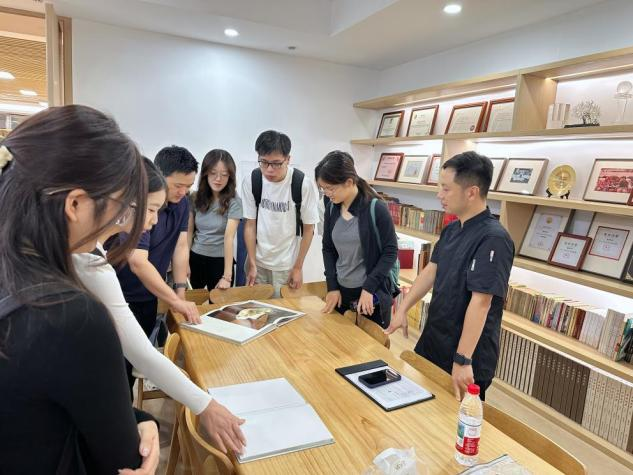
As one of the four major branches of Zhejiang cuisine, Ou cuisine has cooking techniques recognized as provincial-level intangible cultural heritage. It is known for its restrained use of oil and thickening agents, emphasis on precise knife skills, and fresh, delicate flavors that are light but never bland. These qualities reflect Wenzhou’s distinctive food culture, shaped by both mountains and sea. During the session, Ye explored the cuisine’s origins, local ingredients and culinary characteristics, and presented several dishes featuring ingredients from the Wenzhou region. His explanations and demonstrations gave the students a closer look at Ou cuisine’s flavors and cultural significance.
During the hands-on session, the students visited a cooking area to observe and experience the preparation of traditional dishes, including sansi qiaoyu, a pounded-fish dish served with three kinds of shredded ingredients. They learned about ingredient preparation, knife skills and cooking procedures. From the demonstrations to the practical experience, the details of traditional Ou cuisine gave the contestants fresh material for their short videos.
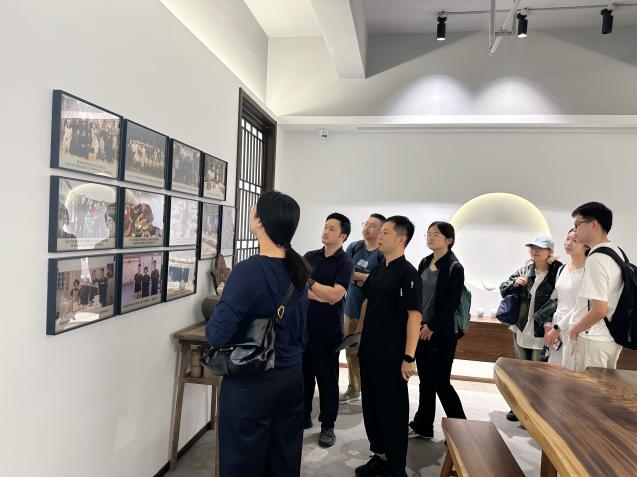
The field study was part of the preparations for the Wenzhou University Students’ Ou Cuisine AI Short Video Competition. Participants will draw on what they learned to explore ways of combining AI technology with short-form video while remaining faithful to the cuisine’s traditional techniques and cultural character. Through the perspectives of a younger generation, their work aims to introduce more people to Ou cuisine and the flavors of Wenzhou.(Source: Wenzhou University School of Innovation and Entrepreneurship | Adapted for regional news publication)