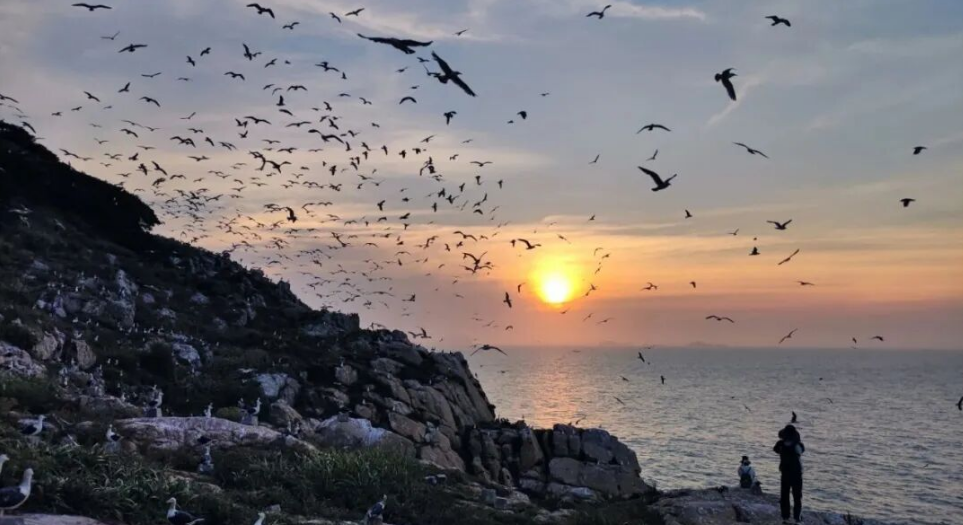
On November 1, a spokesperson for the Chinese Foreign Ministry posted a video on the ministry’s official X, Facebook and Instagram accounts, highlighting the biodiversity fostered by ecological protection in Wenzhou, Zhejiang.
On November 1, a spokesperson for the Chinese Foreign Ministry posted a video on the ministry’s official X, Facebook and Instagram accounts, highlighting the biodiversity fostered by ecological protection in Wenzhou, Zhejiang. This was the third time this year that the Foreign Ministry had focused on Wenzhou.
On November 1, a spokesperson for the Chinese Foreign Ministry posted a video on the ministry’s official X, Facebook and Instagram accounts, highlighting the biodiversity fostered by ecological protection in Wenzhou, Zhejiang. This was the third time this year that the Foreign Ministry had focused on Wenzhou.
In Zhejiang, coastal protection and blue-carbon development have enabled mangrove planting to advance northwards by one degree of latitude, establishing a new northern limit for mangrove cultivation in China. Dongtou, Wenzhou, is a model of this ecological practice. As China’s only ecological transition zone characterised by “mangroves in the south and tamarisks in the north” (a reference to the distribution of these two types of coastal vegetation), it is home to more than 1,200 mu (approximately 80 hectares) of mangrove wetlands. Mangroves stabilise tidal flats and purify seawater, supporting 65 species of benthic organisms, with fish, crabs and shellfish coexisting here. This excellent ecological environment has created a paradise for birds, with rare species such as the black-faced spoonbill living and overwintering here every year. With its mountains embracing the sea, this blue-carbon coast has nurtured a lush garden on the sea.
Dongtou, Wenzhou.
Jiucaiao Beach in the Blue Bay area of Dongtou District.
Nanbeipanshan Provincial Important Wetland in Dongtou.
The editor learned that on the evening of October 29, at the “Restoration Day” event held in Yerevan, Armenia, as part of the 17th meeting of the Conference of the Parties (COP17) to the United Nations Convention on Biological Diversity, China’s “Blue Bay Remediation Action” was recognised as a 2026 United Nations “World Restoration Flagship”. This is the second nationwide ecological conservation and restoration initiative from China to receive flagship status, following the China Shan-Shui Initiative, which was selected in 2022 as one of the first global flagship initiatives. China has become the first country to have two nationwide initiatives recognised as flagship initiatives.
Editor:许淑瑞Reviewer:赵乐韵Managing Editor:徐琼峰Executive Producer:黄作敏Chief Producer:缪磊