

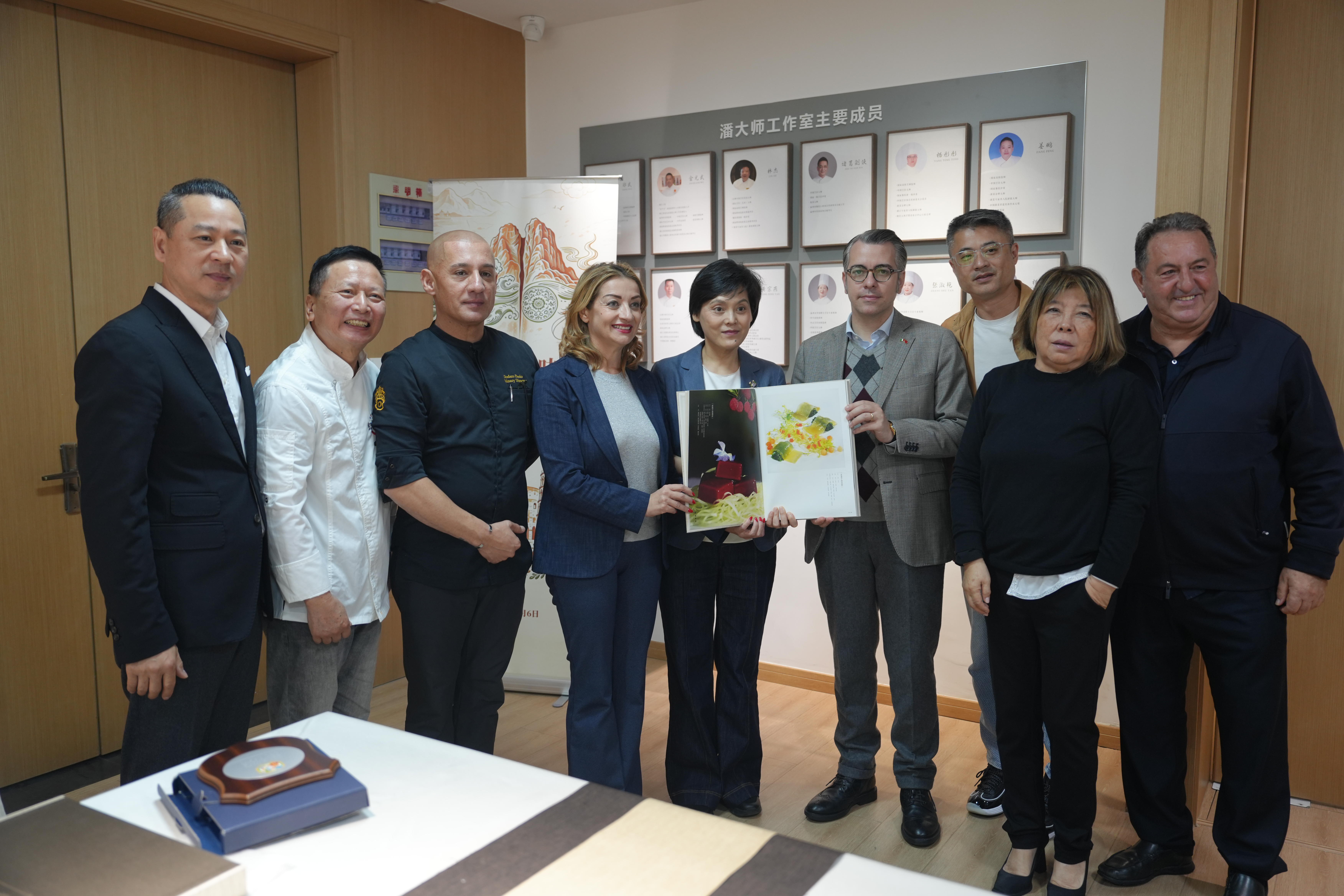
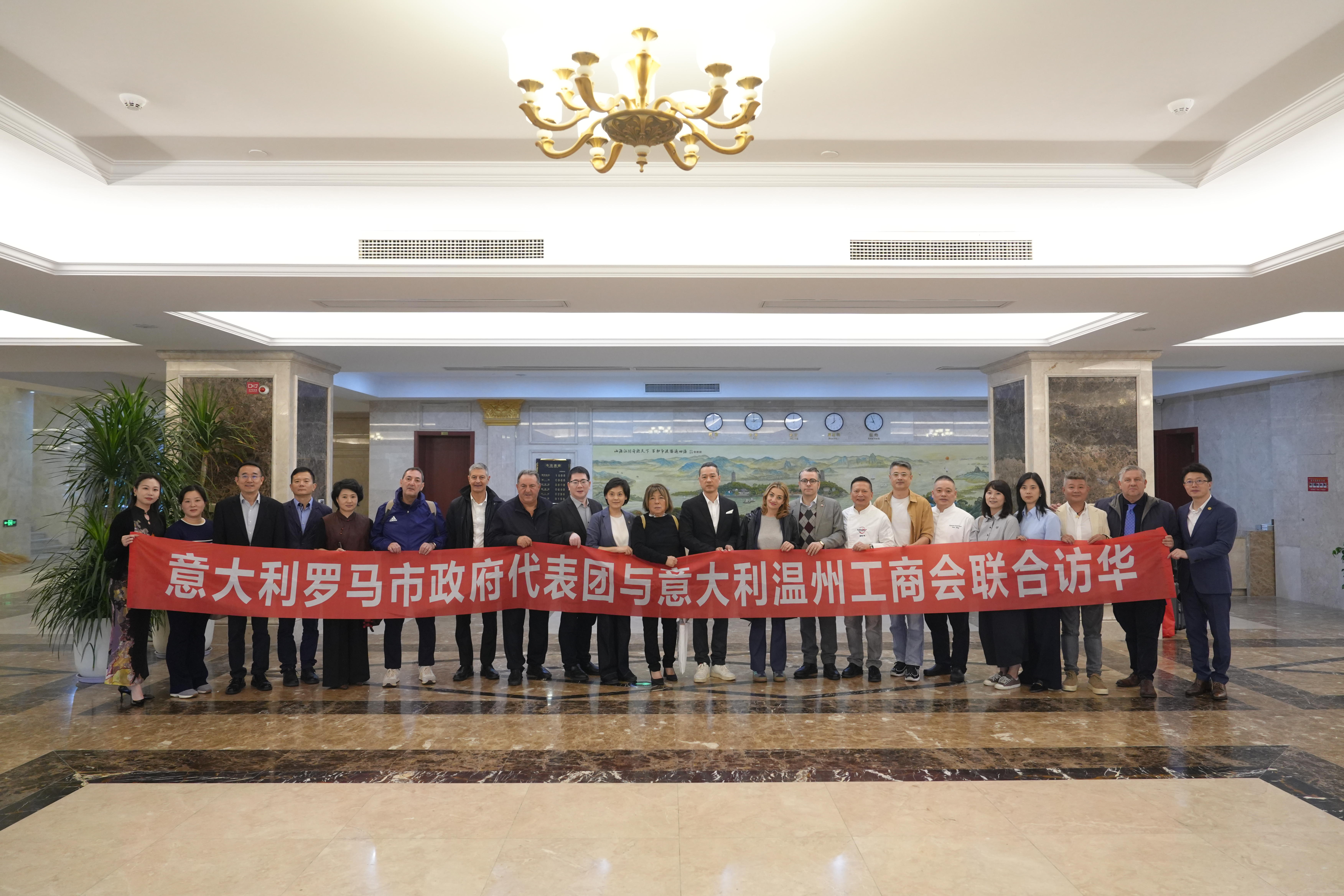
On November 6, Pierluigi Sanna, Deputy Mayor of Italy's Metropolitan City of Rome, led a delegation of representatives from the Rome government and the Wenzhou Chamber of Commerce and Industry in Italy on a visit to master chef Pan Xiaolin's studio.
Pan is a recipient of the State Council's special government allowance and the Jinjue Award for Chinese Master Chefs. The visit featured an exchange of culinary techniques and a tasting session showcasing Ou cuisine, the culinary tradition of Wenzhou, alongside Italian cuisine.
Participants included Yang Mingming, Director of the Wenzhou Municipal Bureau of Culture, Broadcasting and Tourism; Ma Zhiyao, Member of the CPC Leadership Group and Deputy Director of the Wenzhou Municipal Bureau of Culture, Broadcasting and Tourism; and the head of the city's Intangible Cultural Heritage Protection Center. With Ou cuisine as a bridge, the event opened a new channel for sharing Wenzhou's intangible cultural heritage internationally and brought fresh momentum to the city's efforts to earn the City of Gastronomy designation.
Chinese and Italian Food Cultures Meet in Wenzhou
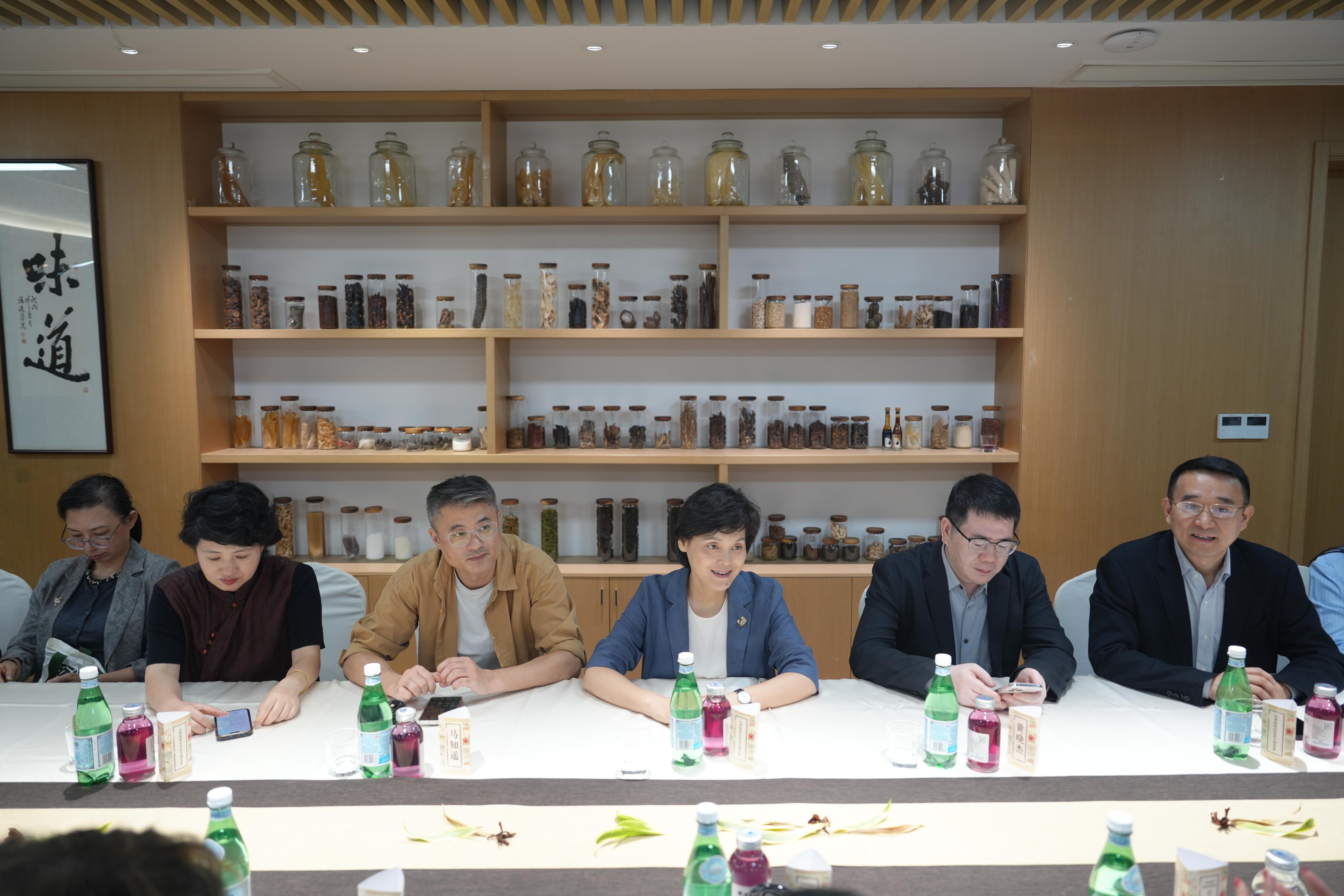
During the exchange, Ma Zhiyao welcomed the visiting guests on behalf of Wenzhou. He said that Wenzhou was making every effort to pursue the City of Gastronomy designation. Italy has a rich and diverse food culture, he noted, and its capital, Rome, offers valuable lessons in preserving culinary traditions, building food brands, and preparing heritage nominations. He expressed the hope that this visit would mark the beginning of further cooperation in culinary exchanges, the sharing of experience in safeguarding intangible cultural heritage, and the development of food tourism.
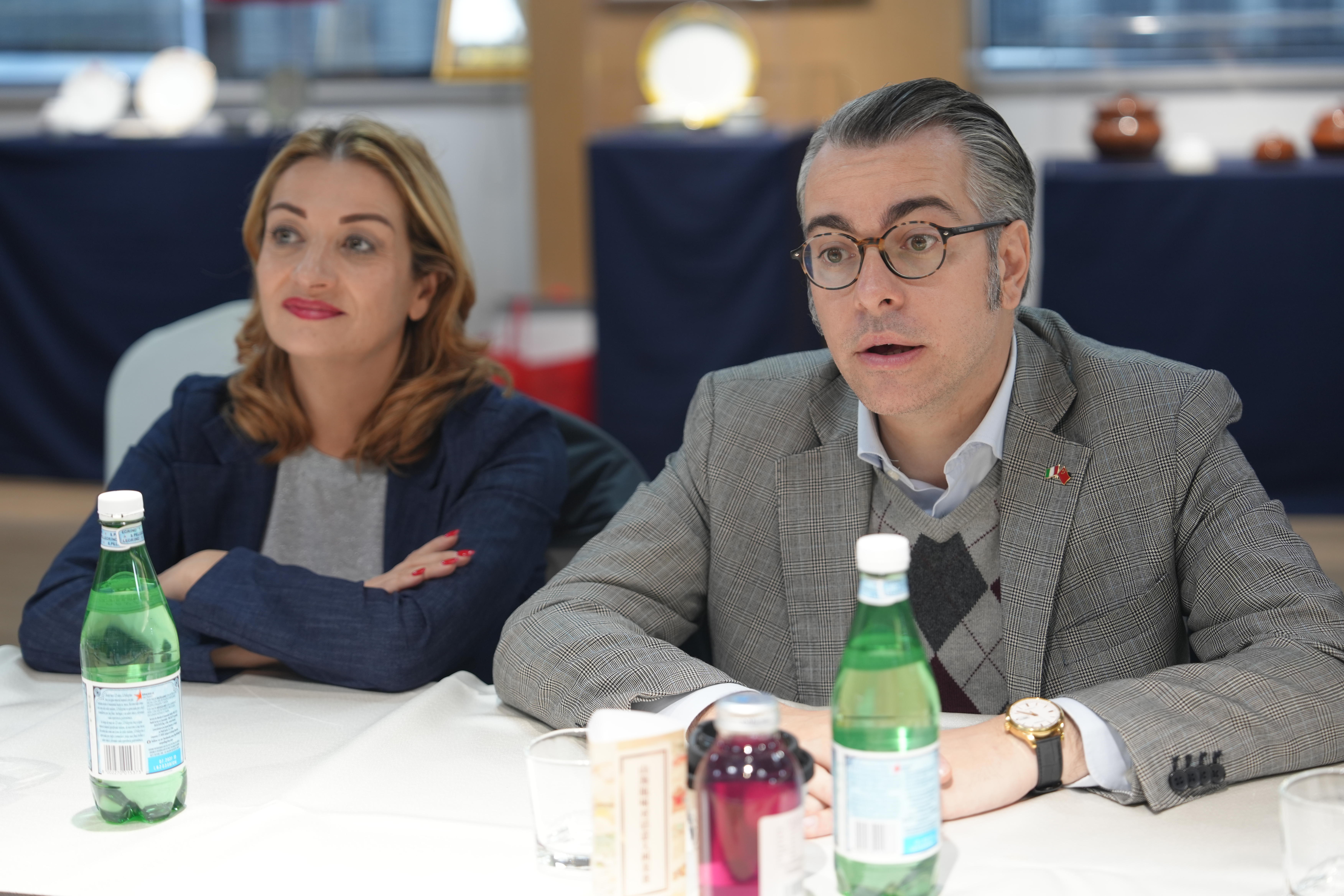
Deputy Mayor Pierluigi Sanna said that people from Wenzhou account for a substantial proportion of the Chinese community in Rome, and that exchanges between Italian and Wenzhou food cultures have a long history. In 2025, “Italian cooking, between sustainability and biocultural diversity” was inscribed on UNESCO's Representative List of the Intangible Cultural Heritage of Humanity. As Italy's capital, Rome is home to world-famous classics such as pizza and tiramisu, while also preserving the culinary wisdom of turning everyday ingredients into delicious dishes. Its emphasis on natural flavors and seasonal cooking resonates with the Chinese principles of eating with the seasons and adapting techniques to ingredients. He said he was honored to take part in an exchange with practitioners of Ou culinary techniques, a representative intangible cultural heritage element recognized at the provincial level in Zhejiang.
Yang Mingming said that Chinese food culture has a long history and an inclusive spirit, emphasizing harmony among the five flavors and the adaptation of techniques to ingredients. Wenzhou maibing, a traditional wheat flatbread, and Italian pizza share a similar approach: both reflect the practical wisdom of using local resources to turn ordinary ingredients into something delicious. Ou cuisine, an important branch of Zhejiang cuisine, centers on seafood. Its preparation uses oil and thickening starch sparingly and places great emphasis on knife skills, producing delicate, finely crafted dishes with light, fresh flavors. Sansi qiaoyu, pounded fish with three shredded accompaniments, features fish slices as thin as cicada wings, while jiangxie sheng, a raw crab dish, is fresh, spicy, and refreshing. These dishes embody both the wisdom of the Ouyue ancestors in drawing sustenance from the sea and the Chinese culinary philosophy of taking flavor as the focus and nourishment as the goal. She noted that the recognition of Italian cooking and food culture as a whole on UNESCO's intangible heritage list, together with Rome's experience in developing food tourism, offers valuable lessons for Wenzhou. She hoped this exchange would help bring Ou cuisine to Italy, introduce Wenzhou's intangible cultural heritage to the world, and support the city's pursuit of the City of Gastronomy designation.
Cooperation Agreement Creates a Lasting Channel for Taking Ou Cuisine Abroad
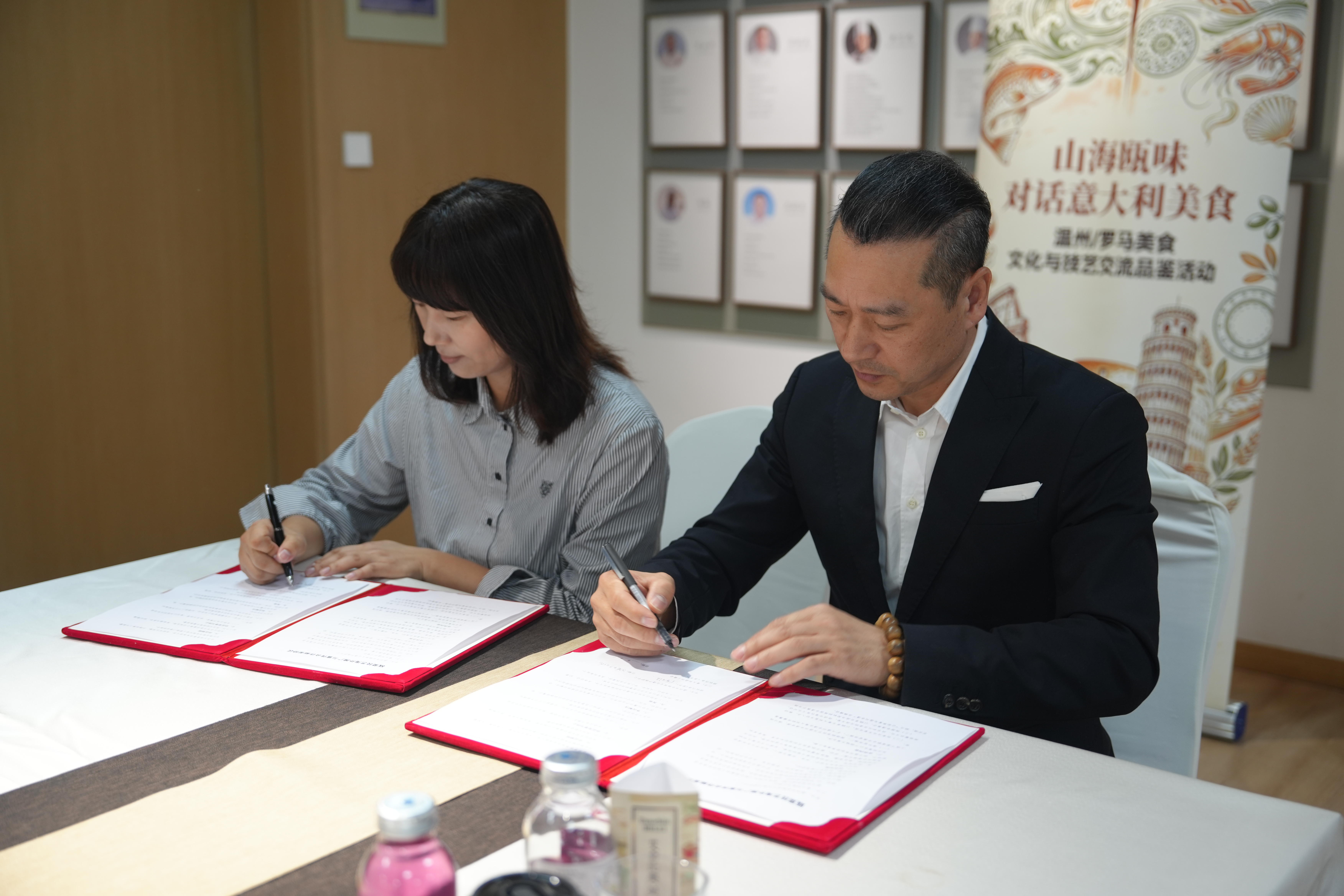
At the event, the Wenzhou Intangible Cultural Heritage Protection Center and the Wenzhou Chamber of Commerce and Industry in Italy signed a framework agreement on international exchanges and the overseas promotion of Ou culinary techniques.
The cooperation will draw on the business networks and media outreach of the Chinese community organization in Italy to establish partnerships in promoting Wenzhou's intangible cultural heritage overseas and encouraging mutual learning between food cultures. Together, the partners aim to raise the international profile and influence of Wenzhou's living heritage and strengthen the initiative branded "Let the World Discover Wenzhou's Intangible Cultural Heritage."
Master Chefs Exchange Skills as Ou Cuisine and Michelin Dishes Share the Table
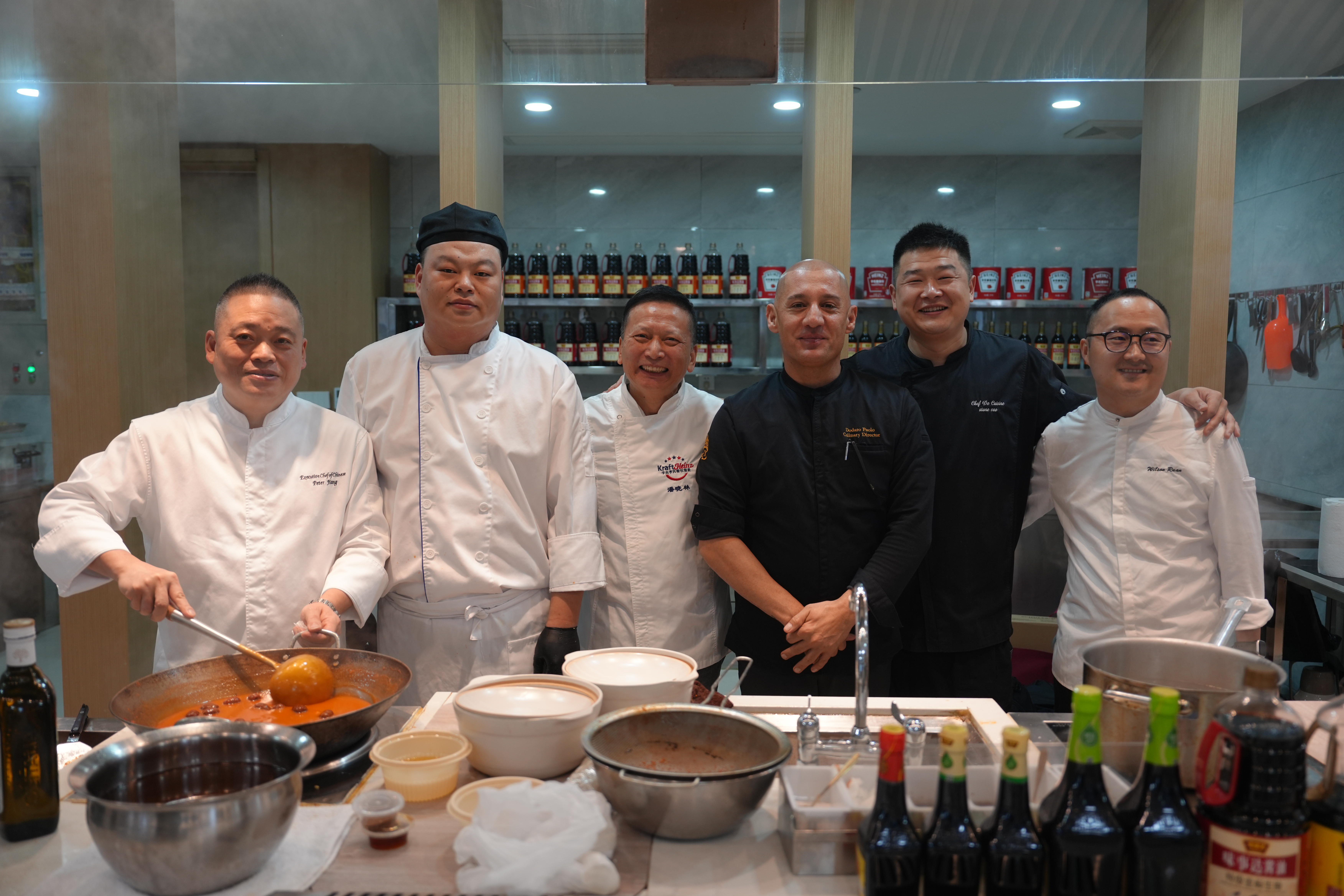
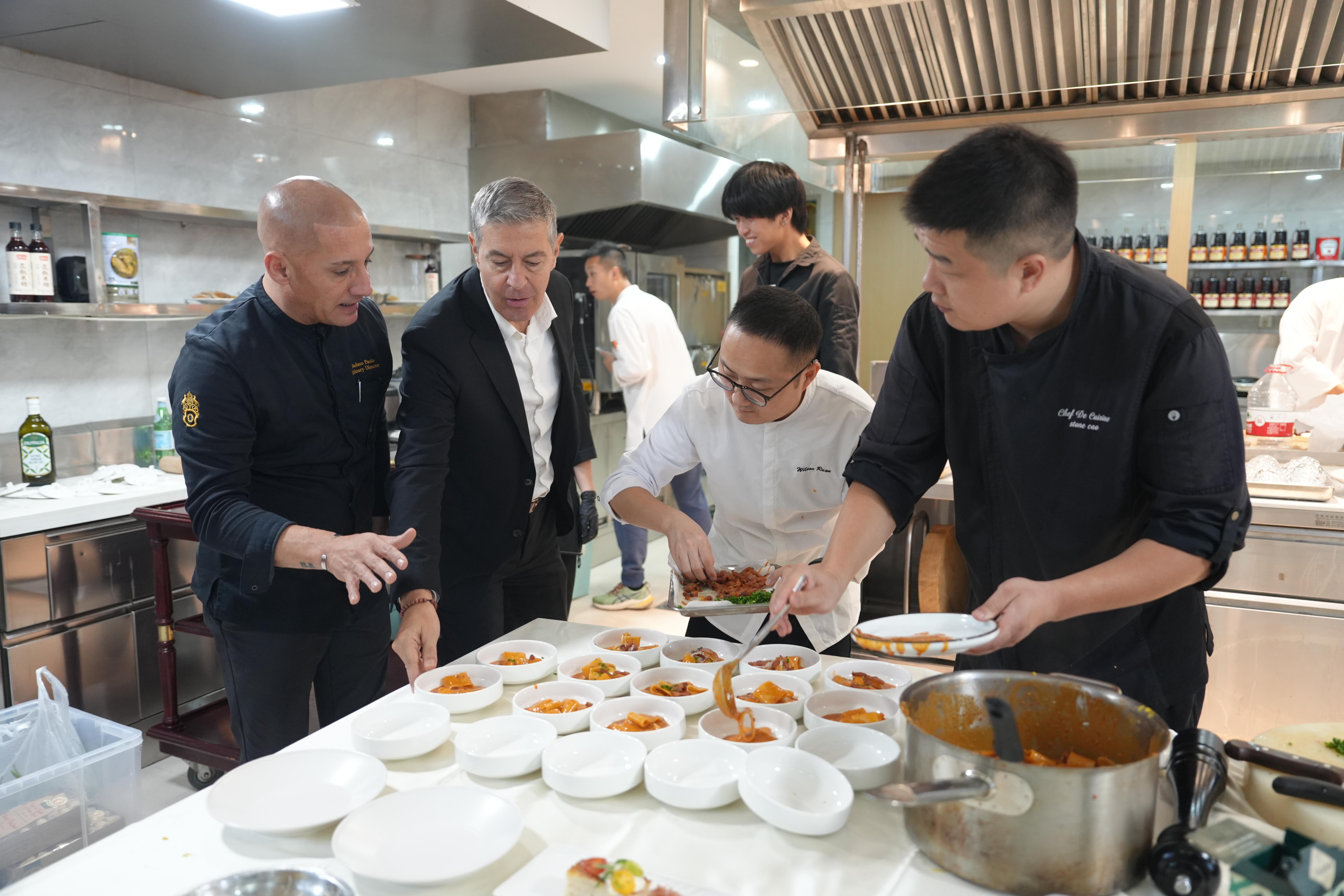
During the event, master chef Pan Xiaolin and his team joined the team led by Paolo Dodaro, chair of the FIC Cina (Italian Chefs Federation - China), for an exchange of Chinese and Italian culinary techniques and a tasting session. The chefs shared their approaches to preparing ingredients, controlling heat, and bringing out flavors. In the same kitchen, the clean, fresh flavors of Ou cuisine met the rich, full-bodied character of Italian cooking. Representatives from both sides then sampled dishes combining the culinary strengths of the two traditions, creating a lively and enthusiastic atmosphere.
Wenzhou currently has five elements included on UNESCO's intangible cultural heritage lists, 35 representative elements recognized at the national level, and 159 at the provincial level. Ou culinary techniques are among its provincial-level representative elements, combining the warmth of everyday life with a deep cultural heritage. The Rome delegation's visit to the master chef's studio was both a practical step in taking Wenzhou's living heritage abroad and an exploration of how cuisine can connect cultures, draw on international experience in safeguarding culinary heritage, and advance the city's pursuit of the City of Gastronomy designation. Looking ahead, Wenzhou will continue to use intangible cultural heritage as a bridge to deepen its international outreach. It will work toward sustained overseas promotion of Ou culinary techniques and regular dialogue between Chinese and Italian food cultures, enabling Wenzhou's living heritage to engage with the world through food. These efforts will further strengthen the "Let the World Discover Wenzhou's Intangible Cultural Heritage" initiative, support the city's pursuit of the City of Gastronomy designation through international heritage exchanges, and contribute to sharing China's fine traditional culture with the wider world.